<?xml version="1.0" encoding="UTF-8"?><feed xmlns="http://www.w3.org/2005/Atom" xmlns:dc="http://purl.org/dc/elements/1.1/">
                                        <id>https://www.singerseries.com/singer-journal</id>
                                            <link rel="self" href="https://www.singerseries.com/singer-journal"></link>
                                <title><![CDATA[BLOG]]></title>
                                                                                                                <updated>2026-06-20T06:39:14+00:00</updated>
                        
            <entry>
            <title><![CDATA[The Rule of Love: How 19th-Century Law Shielded Wife-Beaters]]></title>
            <link rel="alternate" href="https://www.singerseries.com/singer-journal/singer-project/the-rule-of-love-how-19th-century-law-shielded-wife-beaters" />
            <id>https://www.singerseries.com/singer-journal/singer-project/the-rule-of-love-how-19th-century-law-shielded-wife-beaters</id>
            <author>
                <name><![CDATA[Юрий Сергеевич Болдырев]]></name>
                                    <email><![CDATA[chanko@mail.ru]]></email>
                            </author>
            <summary type="html">
                <![CDATA[<p><span style="color: #000000;">For most of the 1800s the question a court asked about a beaten wife was not <em>whether</em> a husband had struck her. It was <em>where</em>.</span></p>
<p><span style="color: #000000;">Behind a closed door, the law mostly shrugged. A married woman, in the eyes of English and American law, was not quite a separate person. Her property, her earnings, her legal voice — all folded into her husband's. So did her body. The leading legal authority of the age held that a man could "correct" his wife the way he corrected a child or a servant, and judges built a whole doctrine on top of that idea: not a license to maim, but a quiet permission to discipline, provided the marks did not show and the neighbors did not talk.</span></p>
<p><span style="color: #000000;">That second condition turned out to be the real law. Society's only firm rule was discretion. Keep it private, keep it modest, and the law would politely look the other way. The wife who suffered in silence was respectable. The wife who screamed in the street was a scandal.</span></p>
<p><span style="color: #000000;">Which is exactly why the story of Isaac Merritt Singer — the sewing-machine king whose product was sold as the great liberator of women — matters here. He broke the only rule that the system actually enforced.</span></p>
<p> </p>
<h2><span style="color: #000000; font-size: 22px;">Key facts</span></h2>
<ul>
<li style="line-height: 1.7;"><span style="color: #000000;">Under <strong>coverture</strong>, a married woman had no separate legal identity; her property, earnings, and legal standing merged into her husband's.</span></li>
<li style="line-height: 1.7;"><span style="color: #000000;">William Blackstone's <em>Commentaries</em> described a husband's power to "correct" his wife as he might a child, so long as he left no permanent injury — courts called it "moderate chastisement."</span></li>
<li style="line-height: 1.7;"><span style="color: #000000;">Legal scholar <strong>Reva Siegel</strong> named the 19th-century shift "the rule of love": courts increasingly treated marital violence as a private matter and refused to intervene, making privacy the abuser's shield.</span></li>
<li style="line-height: 1.7;"><span style="color: #000000;">The famous <strong>"rule of thumb"</strong> — a stick no thicker than a thumb — is a myth, not a real legal doctrine.</span></li>
<li style="line-height: 1.7;"><span style="color: #000000;"><strong>Isaac Merritt Singer (1811–1875)</strong> fathered 24 children by 5 women across parallel households; on <strong>August 7, 1860</strong>, after <strong>Mary Ann Sponsler</strong> confronted him in public for riding out with another woman, he beat her at home — and she had him arrested, exposing his secret life.</span></li>
<li style="line-height: 1.7;"><span style="color: #000000;">The privacy rule protected Singer for years — until Mary Ann stopped staying silent.</span></li>
</ul>
<h2> </h2>
<h2><span style="color: #000000; font-size: 38px;">A husband's right to "correct" his wife</span></h2>
<p> </p>
<p><span style="color: #000000;">Start with the legal furniture, because none of what follows makes sense without it.</span></p>
<p><span style="color: #000000;">The doctrine was called coverture, and it ran through English common law and into American courts. When a woman married, her legal self was, in the language of the time, "covered" by her husband's. She could not own property in her own name, could not keep her wages, could not sign a contract, could not sue on her own. Two people, one legal person — and that person was him.</span></p>
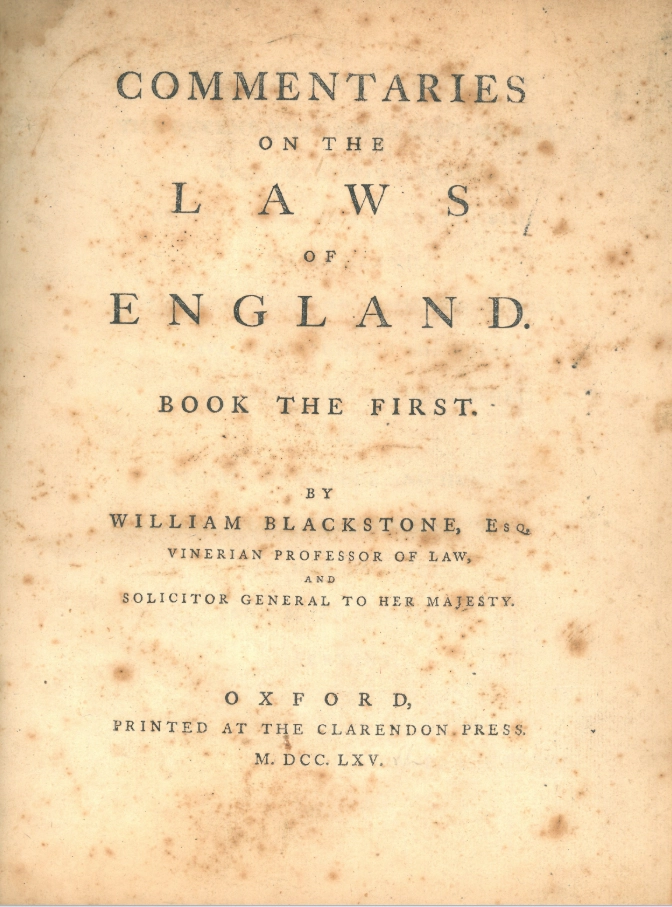
<p><span style="color: #000000;">William Blackstone, whose <em>Commentaries on the Laws of England</em> was the textbook every English-speaking lawyer of the era grew up on, laid it out plainly. A husband, he wrote, might give his wife "moderate correction," the same authority he held over his children and servants, so long as he stopped short of permanent injury. The phrasing was almost domestic. <em>Correction.</em> As if a grown woman were a wayward pupil.</span></p>
<p><span style="color: #000000;">Courts picked up the language and softened it further. The term of art became "moderate chastisement" — a husband's recognized power to discipline his wife physically, within limits. The limits were the point of pride: this was framed as restraint, not cruelty. A civilized man corrected; a brute maimed. The law claimed to police the difference.</span></p>
<p> </p>
<blockquote>
<p><span style="color: #000000;"><strong><span style="font-size: 22px;">Two people became one legal person in marriage. That person was the husband.</span></strong></span></p>
</blockquote>
<p> </p>
<p><span style="color: #000000;"><img src="https://static.super.website/fs/super-website/userFiles/focusnova/uploaded-media/05blackstonelaws-17819595164711.webp" alt="William Blackstone's Commentaries on the Laws of England, the foundational legal textbook that defined a husband's right of &quot;moderate correction&quot; over his wife and placed her, alongside children and servants, under his household authority" width="566" height="764" data-width="566" data-height="764"></img></span></p>
<p><span style="color: #000000;"><em>William Blackstone's</em> Commentaries <em>— the text that defined "moderate correction."</em></span></p>
<p> </p>
<p><span style="color: #000000;">What the law did not do was treat a wife's body as her own. That single fact — her merged, covered, dependent legal self — is the soil everything else grew in.</span></p>
<p> </p>
<h2><span style="color: #000000; font-size: 38px;">The rule of love: privacy as the shield</span></h2>
<p> </p>
<p><span style="color: #000000;">Here is where the story gets quietly sinister, because the law did not simply stay brutal. It grew gentler in its words and harder in its effect.</span></p>
<p><span style="color: #000000;">Over the 19th century, American courts began to back away from openly endorsing a husband's right to strike his wife. The old language of "chastisement" started to embarrass them. But they did not replace it with protection. They replaced it with privacy.</span></p>
<p><span style="color: #000000;">The legal historian Reva Siegel gave this shift its name in a landmark study: <strong>the rule of love.</strong> Instead of declaring that a man <em>may</em> beat his wife, courts increasingly declared that what happened inside a marriage was a private family affair — too delicate, too intimate for a courtroom to meddle in. Judges wrote about marital harmony, about the sanctity of the home, about the wisdom of drawing a curtain over domestic quarrels. The result was the same beating, now wrapped in the warm vocabulary of love and family peace.</span></p>
<p> </p>
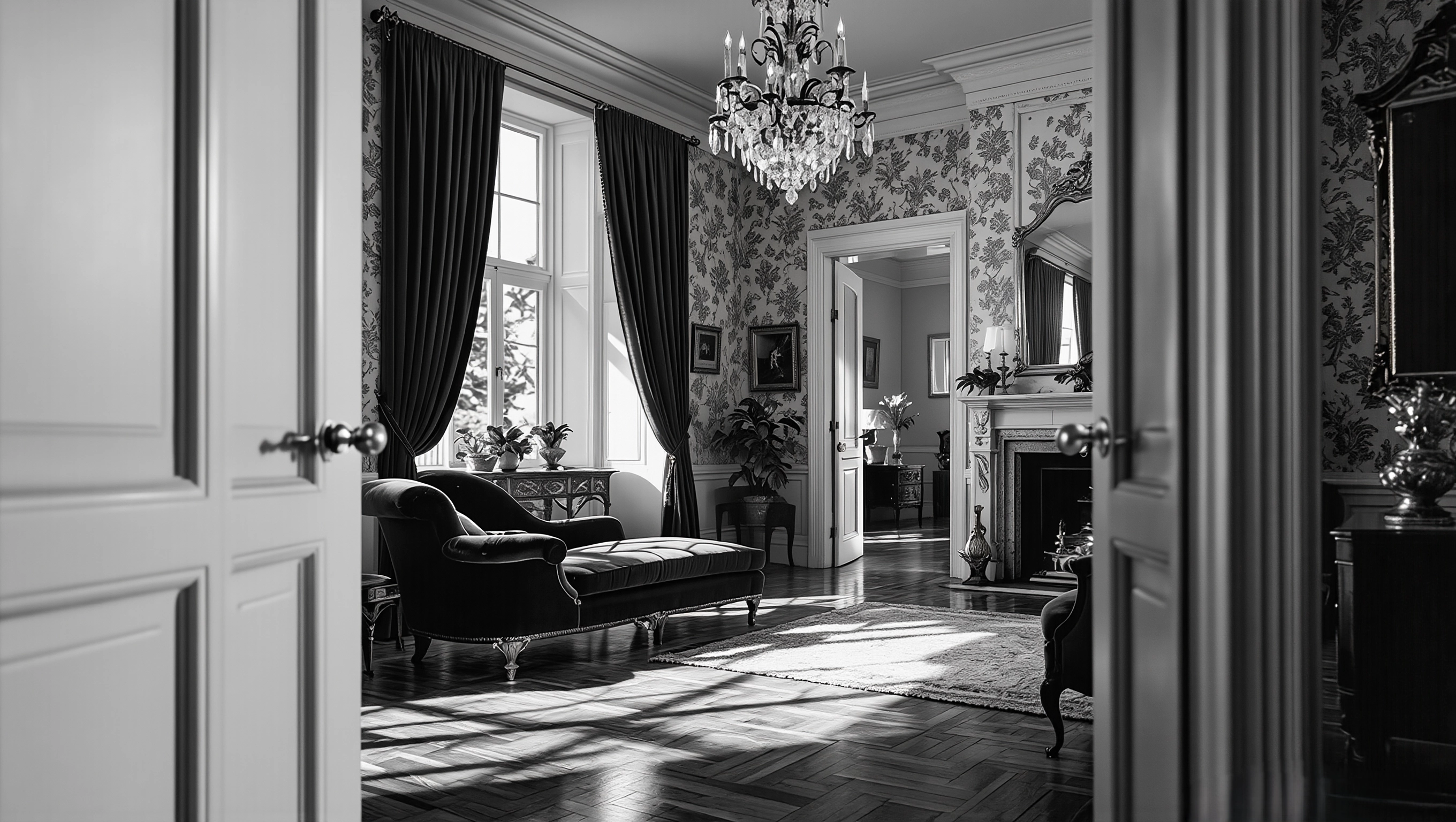
<p><span style="color: #000000;"><img src="https://static.super.website/fs/super-website/userFiles/focusnova/uploaded-media/02parlordoor-17819598977135.webp" alt="A Victorian parlor seen through an open door, symbolizing the private home that 19th-century law and the &quot;rule of love&quot; doctrine refused to enter, turning domestic privacy into a shield for husbands who beat their wives" width="790" height="446" data-width="1460" data-height="824"></img></span></p>
<p><span style="color: #000000;"><em>The private home the law refused to enter.</em></span></p>
<h3><span style="color: #000000; font-size: 22px;">From permission to non-intervention</span></h3>
<p> </p>
<p><span style="color: #000000;">The move was subtle and it mattered enormously. A court that says "a husband may correct his wife" can be argued against, shamed, reformed. A court that says "we do not interfere in the privacy of the home" has built something harder to attack — because it sounds like respect.</span></p>
<blockquote>
<p><span style="color: #000000;"><strong><span style="font-size: 22px;">The old law said a man <em>could</em> beat his wife. The new doctrine simply said the courtroom would not look.</span></strong></span></p>
</blockquote>
<p><span style="color: #000000;">Privacy, in other words, became the abuser's shield. The very value that protects an ordinary family from a meddling state was bent into cover for the man with bruised knuckles. A wife who went to the law might be told, in effect, that her suffering was a household matter and the household's to settle. The door that should have opened onto justice was instead pointed at, and called sacred.</span></p>
<p> </p>
<h2><span style="color: #000000; font-size: 38px;">The silence that made it work</span></h2>
<p> </p>
<p><span style="color: #000000;">A shield only works if people agree to hold it up. And in the 19th century, an entire culture held it up — not the law alone, but the servants, the neighbors, the family, the church, the woman herself.</span></p>
<p><span style="color: #000000;">Respectability was the currency. A household kept its standing as long as its troubles stayed behind its own walls. Servants who heard things downstairs learned not to repeat them. Relatives counseled patience. A bruise could be explained by a fall, a closed door by a headache. The community's deepest instinct was not to rescue the wife but to preserve the appearance — and the wife, dependent on that household for food and shelter and the legitimacy of her children, often had every reason to help preserve it too.</span></p>
<p><span style="color: #000000;">This is the part that modern readers tend to misremember, and a popular myth has made the misremembering worse.</span></p>
<p> </p>
<h3><span style="color: #000000; font-size: 22px;">The myth of the "rule of thumb"</span></h3>
<p><span style="color: #000000;">You have probably heard that an old law let a man beat his wife with a stick "no thicker than his thumb" — and that this is where the phrase <em>rule of thumb</em> comes from. It is a tidy, infuriating story. It is also false.</span></p>
<p><span style="color: #000000;">No such statute existed. Historians have looked, and the supposed legal origin of "rule of thumb" does not hold up; the phrase comes from rough-and-ready practical measurement, not from a wife-beating code. The myth survives because it feels true to the era — and that is precisely why it deserves correcting. The reality was worse in a quieter way. There was no neat measuring stick, no clean legal limit a man could be caught exceeding. There was a vague standard of "moderation," a culture of silence, and a court system increasingly willing to call the whole thing private. No ruler. Just a closed door.</span></p>
<blockquote>
<p><span style="color: #000000;"><strong><span style="font-size: 22px;">The horror was not a measured stick. It was the absence of any measure at all, behind a door no one would open.</span></strong></span></p>
</blockquote>
<p><span style="color: #000000;">So the system ran on silence. And it ran well, for a long time, because the people most able to break the silence — the victims — had the most to lose by breaking it.</span></p>
<p> </p>
<h2><span style="color: #000000; font-size: 38px;">Isaac Singer: the man who forgot the rule</span></h2>
<p> </p>
<p><span style="color: #000000;">Now bring on the man who is supposed to be the hero of women's history, and watch the irony close like a trap.</span></p>
<p><span style="color: #000000;">Isaac Merritt Singer was a showman before he was an industrialist — an actor, a tinkerer, a salesman with enormous appetite and almost no restraint. Working with the lawyer Edward Clark, he turned an improved sewing machine into one of the first great consumer empires of the modern age. The machine that bore his name was marketed, genuinely and successfully, as a gift to women: it collapsed the brutal hours of hand-sewing, put a tool of independence into millions of homes, and let women earn.</span></p>
<p><span style="color: #000000;">His private life was the exact negative of that image. Over his lifetime Singer fathered twenty-four children by five women, keeping parallel households whose members were hidden from one another. He was, in plain terms, a serial bigamist — running his domestic life with the same disregard for rules that built his fortune.</span></p>
<p><span style="color: #000000;">One of those households belonged to Mary Ann Sponsler. For years she lived as "Mrs. Singer," and was the mother of roughly ten of his children. She had been with him through the lean years and the rise. And by her own later testimony, given under oath in court, those years had included beatings — repeated violence in which, she said, he had struck and choked her "to insensibility."</span></p>
<p> </p>
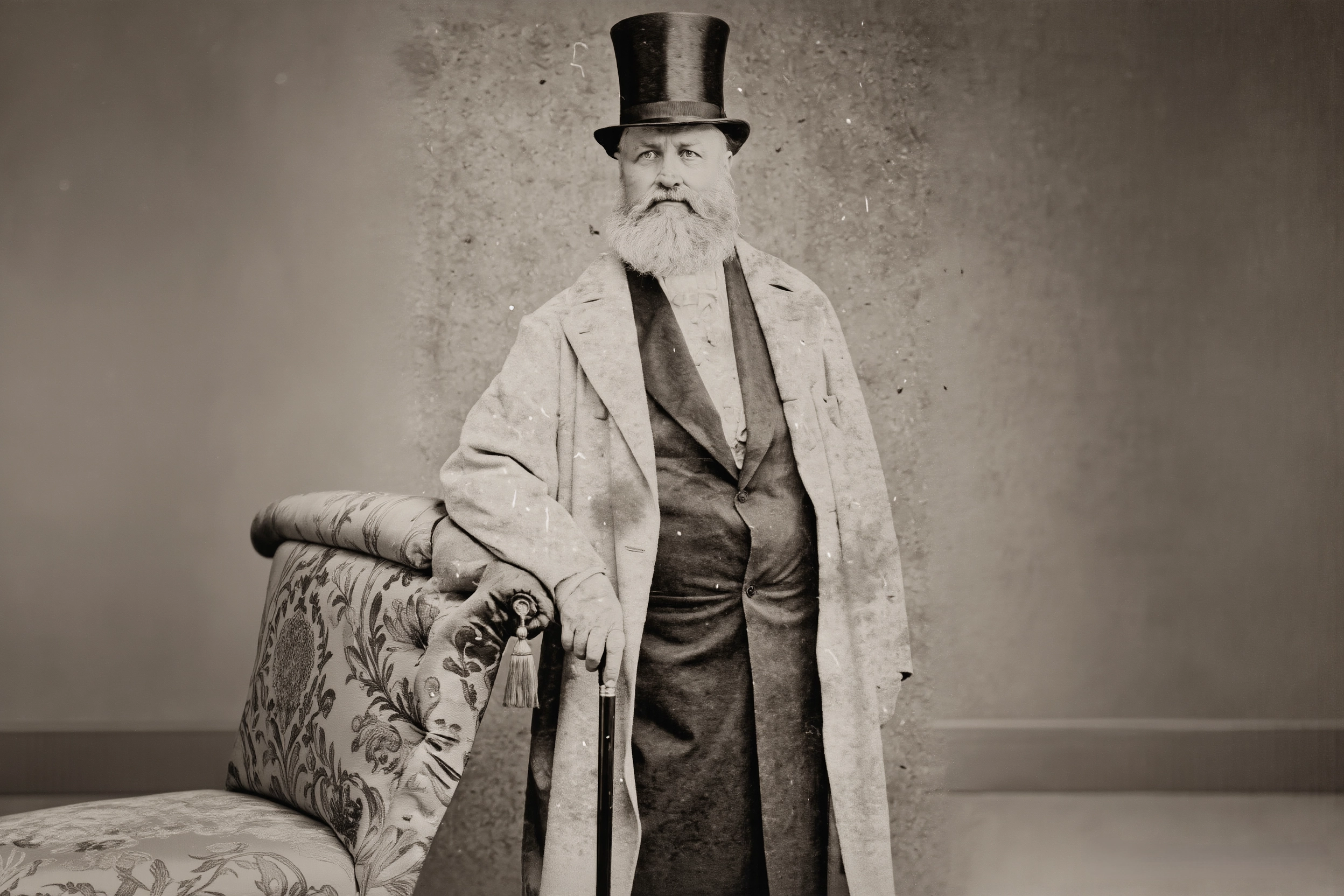
<p><span style="color: #000000;"><img src="https://static.super.website/fs/super-website/userFiles/focusnova/uploaded-media/01isaacsinger-17819602320248.webp" alt="Portrait of Isaac Merritt Singer (1811–1875), sewing-machine magnate and serial bigamist whose 1860 scandal exposed his hidden households." width="788" height="525" data-width="788" data-height="525"></img></span></p>
<p><span style="color: #000000;"><em>Isaac Merritt Singer (1811–1875).</em></span></p>
<blockquote>
<p><span style="color: #000000;"><strong><span style="font-size: 22px;">The machine that freed millions of women from the needle could not free a single woman in his own house.</span></strong></span></p>
</blockquote>
<p><span style="color: #000000;">That is the man. A public benefactor of women, a private tyrant to the ones nearest him. For most husbands of the era, the rule of love would have kept all of this safely out of sight. Singer was about to violate the one condition the system demanded.</span></p>
<p> </p>
<h2><span style="color: #000000; font-size: 38px;">August 7, 1860</span></h2>
<p> </p>
<p class="font-claude-response-body break-words whitespace-normal"><span style="color: #000000;">The break came on a summer day in Manhattan, when one of Singer's hidden households collided with another in broad daylight.</span></p>
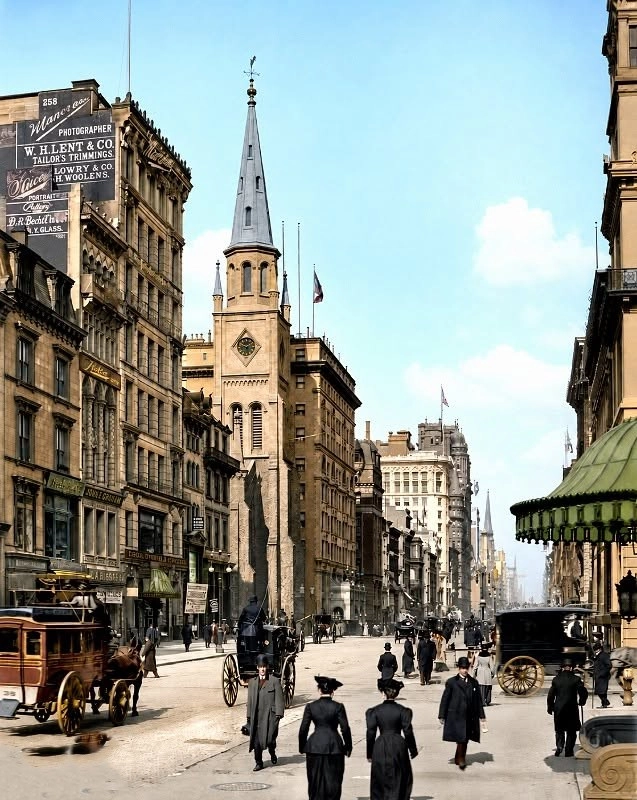
<p class="font-claude-response-body break-words whitespace-normal"><span style="color: #000000;">On August 7, 1860, Mary Ann saw Isaac riding down Fifth Avenue with another woman, Mary McGonigal, whom he also kept as a wife. She confronted him in the open, in the middle of the avenue, in front of anyone who cared to look.</span></p>
<p class="font-claude-response-body break-words whitespace-normal"><span style="color: #000000;">What came next was the kind of violence the privacy doctrine existed to bury. Back at the house, Singer beat her — and when their daughter Voutetti tried to intervene, he struck her too, by Mary Ann's later account beating her to insensibility. But this time the rule did not hold. Mary Ann refused to keep it behind the door: she had him arrested, and the scandal reached the press, reported in <em>Frank Leslie's Illustrated Newspaper</em>.</span></p>
<p> </p>
<p><span style="color: #000000;"><img src="https://static.super.website/fs/super-website/userFiles/focusnova/uploaded-media/5-avenue-17819609675192.webp" alt="Fifth Avenue in New York around 1860, the public street where Isaac Singer's two concealed families collided in broad daylight when Mary Ann Sponsler saw him with another woman, leading to the assault and his arrest" width="567" height="712" data-width="637" data-height="800"></img></span></p>
<p data-pm-slice="1 1 []"><span style="color: #000000;"><em>Fifth Avenue looking north from 28th Street in New York City</em></span></p>
<blockquote>
<p><span style="color: #000000;"><strong><span style="font-size: 22px;">For years the rule had held because she stayed silent. It broke the moment she refused to.</span></strong></span></p>
</blockquote>
<p><span style="color: #000000;">That refusal is the hinge of the entire story. The doctrine of privacy had no power over a woman who would not keep the secret. Once Mary Ann spoke, the shield was useless — because the violence was already in the newspapers and the courtroom, out in the public air where the law could no longer pretend not to see.</span></p>
<p> </p>
<h2><span style="color: #000000; font-size: 38px;">The silence breaks: bigamy exposed, arrest, flight</span></h2>
<p> </p>
<p><span style="color: #000000;">The arrest itself was bad. What it dragged into the light was catastrophic for him.</span></p>
<p><span style="color: #000000;">Once the scandal cracked the surface, the rest came pouring out. Singer was not a respectable husband who had lost his temper. He was a man running four parallel households, a string of women and children kept hidden from one another, each believing in some version of a life he had no intention of honoring. The arrest put his name in the press; the press put his secret architecture on display. The benefactor of women stood exposed as a serial bigamist who beat the women he kept.</span></p>
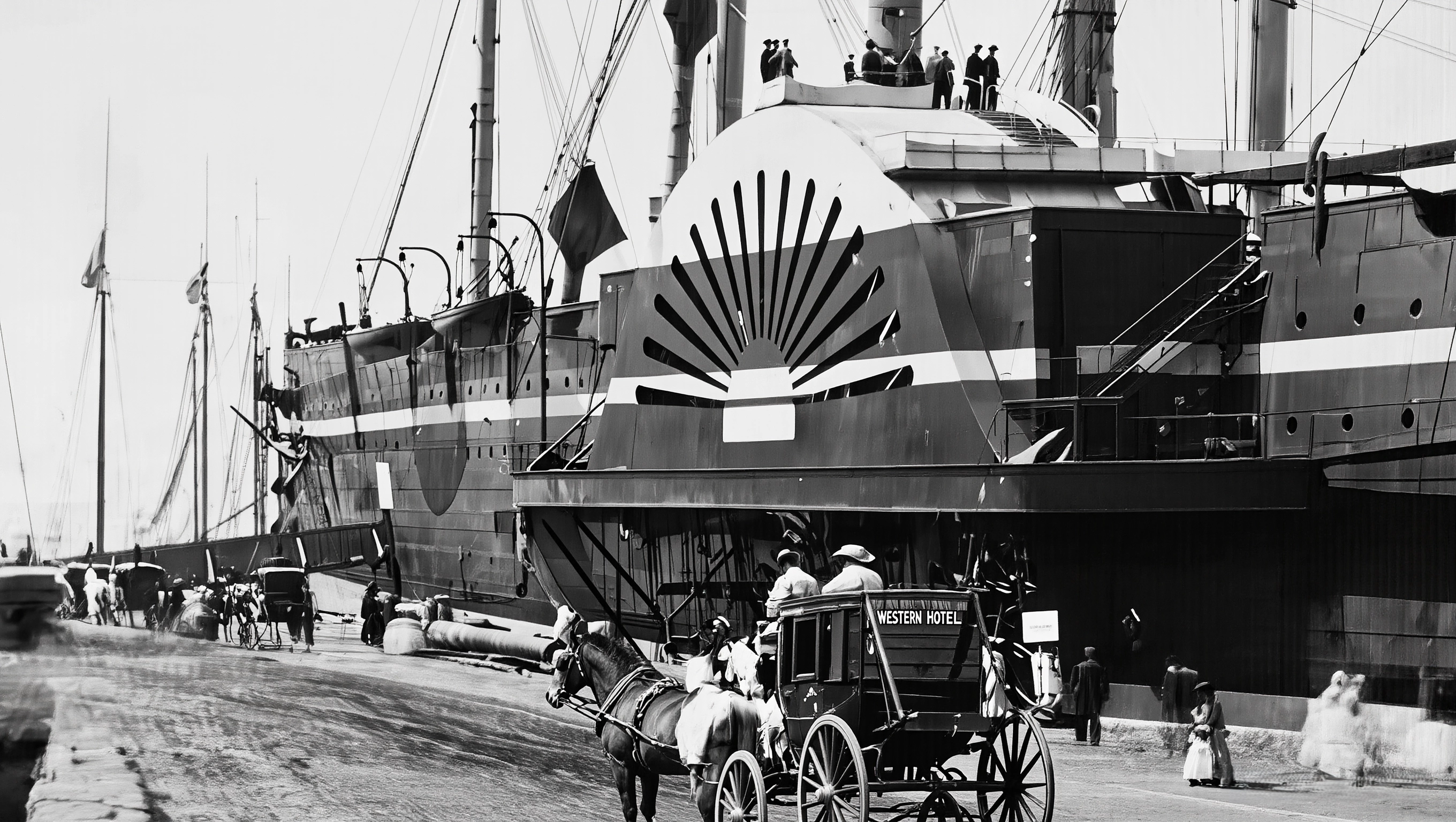
<p><span style="color: #000000;">He did what powerful men with money have always done when the ground opens under them. He left. Already married to Isabella Boyer in 1863, he settled in England, far from the New York courts and the New York papers, and built himself a grand house at Paignton, in Devon. (Its vast, palace-like form came later: his son Paris rebuilt the estate into a Versailles-by-the-sea years after Isaac's death.) He arranged his late life with all the comfort his fortune could buy.</span></p>
<p><span style="color: #000000;">The man escaped. The pattern he had relied on did not survive contact with a victim who talked. That is the lesson hiding inside his flight: the rule of love protected him perfectly right up until the day it didn't, and what ended it was not a reforming judge or a new statute. It was one woman declining to be quiet.</span></p>
<p> </p>
<p><span style="color: #000000;"><img src="https://static.super.website/fs/super-website/userFiles/focusnova/uploaded-media/06shipgreateastern-17819611120517.webp" alt="A mid-19th-century ocean steamship evoking Isaac Singer's flight from New York to England after the 1860 bigamy scandal, where he rebuilt his fortune at a 115-room mansion in Paignton, Devon" width="786" height="444" data-width="781" data-height="441"></img></span></p>
<p><span style="color: #000000;"><em>Flight: rather than face the New York courts, Singer sailed for England.</em></span></p>
<h2><span style="color: #000000; font-size: 38px;">The reckoning</span></h2>
<p> </p>
<p><span style="color: #000000;">Isaac Singer died in 1875, rich beyond the dreams of the runaway apprentice he had once been, leaving an estate of roughly $13 million. He used part of it to settle one last score. To his eldest son William — who had sided with an abandoned mother in the family's legal wars — he left five hundred dollars. Revenge from the grave, written into the will of a dying millionaire.</span></p>
<p><span style="color: #000000;">Sit with the central irony, because it is the whole point. The Singer machine is one of history's genuine instruments of women's emancipation. It put earning power and independence into the hands of millions of women who had been chained to the needle. And the man who built it could not, or would not, extend that freedom to a single woman under his own roof. He freed the world's seamstresses and beat the mother of his children.</span></p>
<p> </p>
<p><span style="color: #000000;"><img src="https://static.super.website/fs/super-website/userFiles/focusnova/uploaded-media/07maryannportrait-17819612530907.webp" alt="Portrait of a woman of the 1860s era, illustrating the world of wives held under coverture in 19th-century America, when a husband's violence was treated as a private family matter the courts declined to judge" width="788" height="445" data-width="820" data-height="463"></img></span></p>
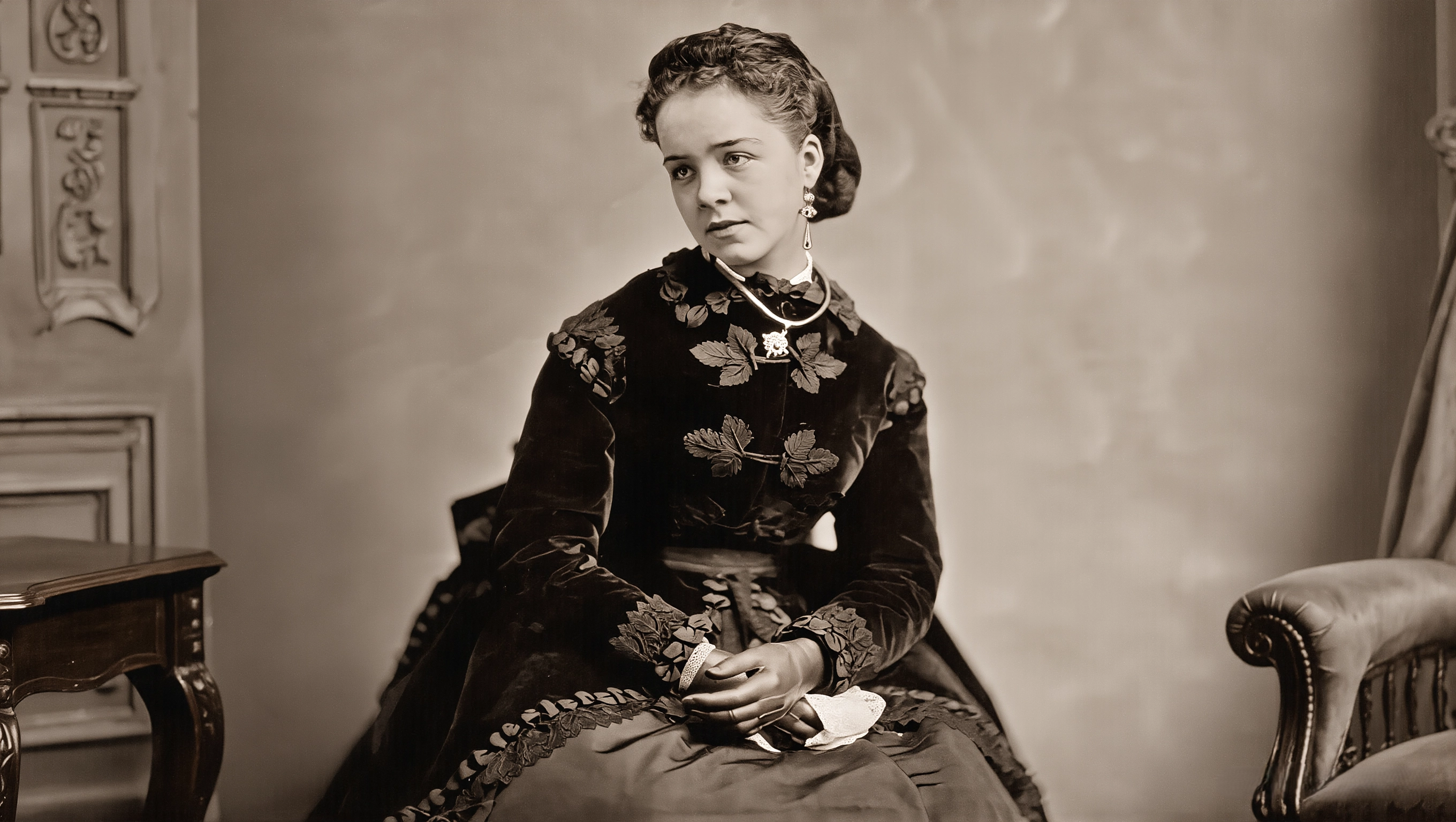
<p><span style="color: #000000;"><em>A woman of the era, c. 1860.</em></span></p>
<blockquote>
<p><span style="color: #000000;"><strong><span style="font-size: 22px;">He liberated women he would never meet, and terrorized the ones he knew.</span></strong></span></p>
</blockquote>
<p><span style="color: #000000;">And the rule of love held for him as long as it holds for any abuser: as long as the victim stays silent. It was not the law that finally moved against Isaac Singer. The law was, if anything, his ally — coverture, "moderate chastisement," the soothing doctrine of domestic privacy. What broke him was Mary Ann Sponsler walking into the open and refusing to pretend. That is why this history is not a museum piece. The shield he hid behind — <em>it's private, it's a family matter, don't make a scene</em> — is still raised today, every time someone is told to keep it quiet for the sake of appearances.</span></p>
<p><span style="color: #000000;">There is one more thread, and it belongs to the book rather than to the documented record on this page. The story explored in <em>SINGER: The Scoundrel Who Changed the World</em> suggests that the public scandal was not the first time — that, a year before, after a beating, Mary Ann had once gone away for several days to let the bruises fade so that no one would see. Whether and how that fits the larger picture is the kind of thread the book pulls. What the record here makes plain is simpler and harder: the rule worked through silence, and it died the day a woman stopped being silent.</span></p>
<p> </p>
<h2><span style="color: #000000; font-size: 38px;">Frequently asked questions</span></h2>
<h3><span style="color: #000000; font-size: 22px;">Was it actually legal for a husband to beat his wife in the 19th century?</span></h3>
<p><span style="color: #000000;">In effect, within limits, for much of the period — yes. Under coverture a wife had no separate legal identity, and Blackstone's influential <em>Commentaries</em> described a husband's right to give his wife "moderate correction" so long as he caused no permanent injury. Courts spoke of "moderate chastisement." Later in the century, courts shifted from openly permitting violence to simply declining to intervene in what they called private family matters — which protected abusers just as effectively.</span></p>
<p> </p>
<h3><span style="color: #000000; font-size: 22px;">What does "the rule of love" mean?</span></h3>
<p><span style="color: #000000;">It is the term the legal scholar Reva Siegel used for a 19th-century shift in how courts handled marital violence. Rather than affirming a husband's right to strike his wife, courts increasingly reclassified domestic abuse as a private family matter and refused to get involved, citing marital harmony and the sanctity of the home. The language grew loving; the protection for victims did not. Privacy became the abuser's shield.</span></p>
<p> </p>
<h3><span style="color: #000000; font-size: 22px;">Is the "rule of thumb" — beating a wife with a stick no thicker than a thumb — a real law?</span></h3>
<p><span style="color: #000000;">No. It is a persistent myth. No such statute existed, and historians have found no genuine legal origin for the phrase along these lines. The reality was in some ways worse: there was no clear measurable limit at all, only a vague standard of "moderation" and a culture, increasingly backed by the courts, of treating the whole matter as private.</span></p>
<p> </p>
<h3><span style="color: #000000; font-size: 22px;">Who was Mary Ann Sponsler?</span></h3>
<p><span style="color: #000000;">She was <strong>Isaac Singer's</strong> common-law wife, who lived for years as "Mrs. Singer" and was the mother of roughly ten of his children. By her own later court testimony, she had endured repeated beatings over the years. On August 7, 1860, after a public confrontation that ended with him beating her at home, she went to the authorities rather than hide it — the act that exposed his secret life.</span></p>
<p> </p>
<h3><span style="color: #000000; font-size: 22px;">What happened on August 7, 1860?</span></h3>
<p><span style="color: #000000;">Mary Ann saw Isaac riding down Fifth Avenue with another woman, <strong>Mary McGonigal</strong>, whom he also kept as a wife, and confronted him publicly. Afterward, at the house, he beat her severely and also struck their daughter Voutetti when she tried to intervene. This time Mary Ann did not keep it quiet: she had him arrested, and the case reached the press, including <strong><em>Frank Leslie's Illustrated Newspaper</em></strong>.</span></p>
<p> </p>
<h3><span style="color: #000000; font-size: 22px;">What happened to Isaac Singer after the scandal?</span></h3>
<p><span style="color: #000000;">The public arrest cracked open his hidden life — four parallel households and a string of women and children kept from one another. He married Isabella Boyer in 1863 and settled at Paignton in Devon, where he built a grand house (later enlarged by his son Paris into the vast Oldway Mansion). He died in 1875 leaving about $13 million; to his eldest son William, who had sided with an abandoned mother, he left just $500.</span></p>
<p> </p>
<h2><span style="color: #000000; font-size: 22px;">Sources</span></h2>
<ul>
<li><span style="color: #000000;">Reva B. Siegel, "The Rule of Love: Wife Beating as Prerogative and Privacy," <em>Yale Law Journal</em> (1996).</span></li>
<li><span style="color: #000000;">William Blackstone, <em>Commentaries on the Laws of England</em>.</span></li>
<li><span style="color: #000000;"><em>Frank Leslie's Illustrated Newspaper</em> and the New York press, 1860.</span></li>
<li><span style="color: #000000;">Ruth Brandon, <em>Singer and the Sewing Machine</em> (1977).</span></li>
</ul>
<hr></hr>
<h2 style="text-align: center;"><span style="font-size: 38px;">Read more</span></h2>
<p style="text-align: center;"><span style="color: #000000;"><span style="color: #270101;"><strong><a style="color: #270101;" href="https://www.singerseries.com/singer-journal/singer-project/the-hungry-wolf-in-a-golden-muzzle-who-was-isaac-singer">The Hungry Wolf in a Golden Muzzle: Who Was Isaac Singer?</a></strong></span> — the showman, the bigamist, the genius who built an empire and ran from the scandal that exposed it.</span></p>
<p style="text-align: center;"><span style="color: #000000;"><span style="color: #270101;"><strong><a style="color: #270101;" href="https://www.singerseries.com/singer-journal/singer-project/edward-clark-singer-empire">Edward Clark: The Lawyer Who Built the Singer Empire</a></strong></span> — the quiet partner who turned Singer's chaos into the world's first global consumer brand. The man behind the Dakota.</span></p>
<p style="text-align: center;"><span style="color: #000000;"><span style="color: #270101;"><strong><a style="color: #270101;" href="https://www.singerseries.com/singer-journal/singer-project/winnaretta-singer-polignac-legacy">The Scoundrel's Daughter: Winnaretta Singer</a></strong></span> — how Singer's sewing-machine money bought the music of the 20th century.</span></p>
<hr></hr>
<p style="text-align: center;"><strong><span style="color: #000000;">Subscribe to the Singer Series and receive the first chapter of   </span></strong><span style="font-size: 18px;"><a href="https://singer-book.com" target="_blank" rel="noopener noreferrer"><span style="color: #270101;">SINGER: <span class="red">The Scoundrel </span>Who Changed the World</span></a>  <strong><span style="color: #000000;">free before publication.</span></strong></span><strong><span style="color: #000000;">            <a class="btn buttons1474874760576" contenteditable="false" href="https://t.me/SingerSeriesBot?start=chapter1" target="_blank" rel="noopener">Get the chapter 1</a></span></strong></p>
<hr></hr>
<p><span style="color: #270101;">If you or someone you know is affected by domestic abuse, support is available. In the US, the National Domestic Violence Hotline is at 1-800-799-7233 or thehotline.org.</span></p>
<p><span style="color: #270101;">In the UK, call Refuge on 0808 2000 247; elsewhere, contact your local domestic-abuse service.</span></p>
<p> </p>]]>
            </summary>
                            <link rel="enclosure" href="https://static.super.website/fs/super-website/userFiles/focusnova/images/a-4-rule-of-love-17819408739728.png" length="1241785" type="image/png" />
                        <category term="Singer Project" />
            <updated>2026-06-20T06:39:14+00:00</updated>
                            <dc:description><![CDATA[How coverture and the &quot;rule of love&quot; gave husbands legal cover to beat their wives — until Mary Ann Sponsler broke the silence and exposed Isaac Singer&#039;s hidden life.]]></dc:description>
                    </entry>
            <entry>
            <title><![CDATA[Winnaretta: How a Sewing Machine Paid for the Music of the 20th Century]]></title>
            <link rel="alternate" href="https://www.singerseries.com/singer-journal/singer-project/winnaretta-singer-polignac-legacy" />
            <id>https://www.singerseries.com/singer-journal/singer-project/winnaretta-singer-polignac-legacy</id>
            <author>
                <name><![CDATA[Юрий Сергеевич Болдырев]]></name>
                                    <email><![CDATA[chanko@mail.ru]]></email>
                            </author>
            <summary type="html">
                <![CDATA[<p> </p>
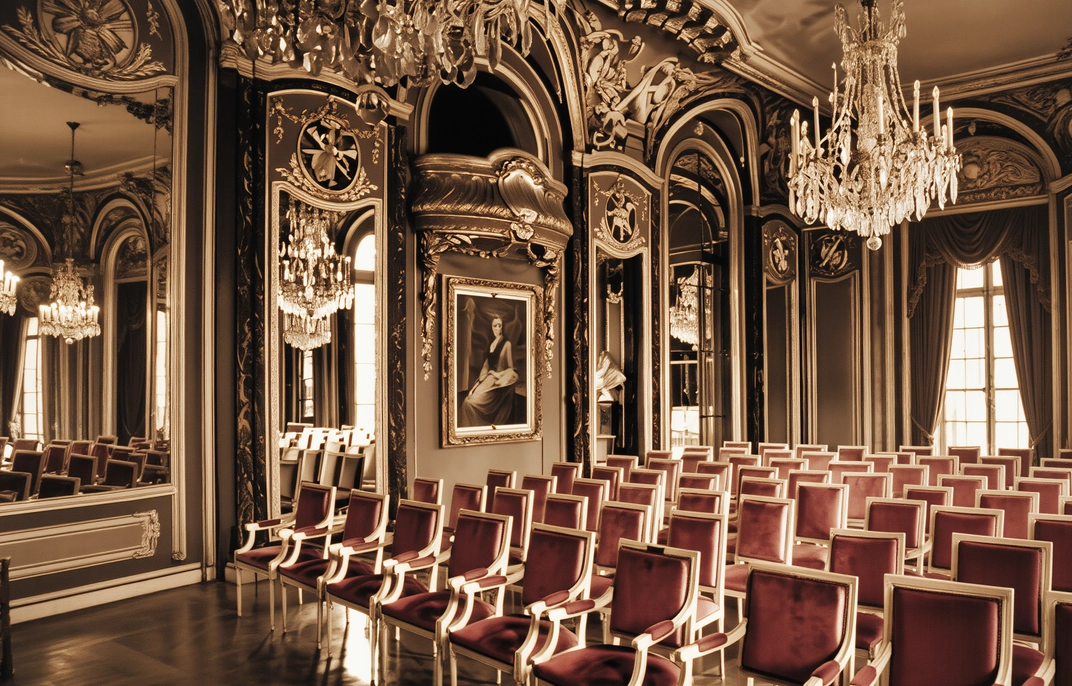
<p class="font-claude-response-body break-words whitespace-normal leading-[1.7]"><span style="color: #000000;">Paris, 1905. In the music room on the avenue Henri-Martin the last Bach chord has just died away. The hostess — Princesse Edmond de Polignac, born Winnaretta Singer — sets aside a financial report from the Singer company, whose machines now sell across much of the world. Two floors below, in a basement workroom, a machine still chatters toward dawn: some woman finishing a stranger's dress to feed her children.</span></p>
<p class="font-claude-response-body break-words whitespace-normal leading-[1.7]"><span style="color: #000000;">Same rhythm. Same cast iron. One name.</span></p>
<p class="font-claude-response-body break-words whitespace-normal leading-[1.7]"><span style="color: #000000;">With the cheap coins squeezed from washerwomen and seamstresses the world over, the industrialist's daughter was buying Stravinsky, Satie and Ravel. <strong>He chased small change. A new world was the change he got back.</strong></span></p>
<p class="font-claude-response-body break-words whitespace-normal leading-[1.7]"><span style="color: #000000;"><strong><img src="https://static.super.website/fs/super-website/userFiles/focusnova/uploaded-media/winnaretta-salon-17802413883566.webp" alt="The music salon of the Princesse de Polignac in her Paris hôtel particulier on avenue Henri-Martin. Velvet chairs are set in concert rows; the painting on the back wall is the hostess herself — Winnaretta Singer, daughter of Isaac Merritt Singer. Here, in the first decades of the twentieth century, premiered works by Stravinsky, Satie, Ravel, Poulenc, Milhaud, and Tailleferre." width="731" height="468" data-width="731" data-height="468"></img></strong></span></p>
<p class="font-claude-response-body break-words whitespace-normal leading-[1.7]"><em><span style="color: #000000;">The music room of the Polignac hôtel on the avenue Henri-Martin — where Stravinsky, Satie and Ravel were first heard.</span></em></p>
<h2 class="text-text-100 mt-3 -mb-1 text-[1.125rem] font-bold"> </h2>
<h2 class="text-text-100 mt-3 -mb-1 text-[1.125rem] font-bold"><span style="font-size: 38px; color: #000000;">"A name I curse"</span></h2>
<p class="font-claude-response-body break-words whitespace-normal leading-[1.7]"> </p>
<p class="font-claude-response-body break-words whitespace-normal leading-[1.7]"><span style="color: #000000;">At a Paris auction in the early 1890s two bidders fought over a single Monet — <em>A Field of Tulips near Haarlem</em>. An American woman won it. The loser — the impoverished Prince Edmond de Polignac — cursed the picture: it had been carried off, he said, by "an American who bears a name I curse." The name was Singer.</span></p>
<p class="font-claude-response-body break-words whitespace-normal leading-[1.7]"><span style="color: #000000;">A few years later he married that American, and got the painting after all. With her came a fortune that would help redraw the map of European art.</span></p>
<p class="font-claude-response-body break-words whitespace-normal leading-[1.7]"><span style="color: #000000;">This is the story of what the "scoundrel’s" name became — and of the daughter who turned it.</span></p>
<p class="font-claude-response-body break-words whitespace-normal leading-[1.7]"><span style="color: #000000;"><img src="https://static.super.website/fs/super-website/userFiles/focusnova/uploaded-media/winarrett-and-polignac-17802417899102.webp" alt="Winnaretta Singer and Prince Edmond de Polignac in Paris, shortly after their marriage of December 1893. She was twenty-eight; he was fifty-nine — a French aristocrat, amateur composer, and son of Charles X's prime minister. Both homosexual, theirs was a celebrated mariage blanc of friendship and shared artistic devotion. From the income Winnaretta inherited from her father's sewing-machine fortune, they built one of the most influential musical salons in Europe." width="729" height="467" data-width="729" data-height="467"></img></span></p>
<p class="font-claude-response-body break-words whitespace-normal leading-[1.7]"><em><span style="color: #000000;">Winnaretta and Prince Edmond de Polignac, soon after their 1893 mariage blanc — a marriage of friendship that built a salon.</span></em></p>
<h2 class="text-text-100 mt-3 -mb-1 text-[1.125rem] font-bold"> </h2>
<h2 class="text-text-100 mt-3 -mb-1 text-[1.125rem] font-bold"><span style="color: #000000; font-size: 38px;">The last daughter but one</span></h2>
<p class="font-claude-response-body break-words whitespace-normal leading-[1.7]"> </p>
<p class="font-claude-response-body break-words whitespace-normal leading-[1.7]"><span style="color: #000000;">Winnaretta Eugénie Singer was born in Yonkers on 8 January 1865, the second-to-last daughter of Isaac Merritt Singer — the man who "perfected the sewing machine" and made millions on it. Of his twenty-four children only one girl came after her — her younger sister Isabelle-Blanche. She spent two years in New York; she was raised in France and England, and inherited young: by the Singer Foundation's own account, $167,000 from her father's personal savings, tens of thousands more in cash, and over $600,000 in Singer stock, plus a share of the English estate. A fabulously rich heiress at twelve.</span></p>
<blockquote class="ml-2 border-l-4 border-border-300/10 pl-4 text-text-300">
<p class="font-claude-response-body break-words whitespace-normal leading-[1.7]"><span style="color: #000000;"><span style="font-size: 22px;"><strong>"An eight-thousand-volt being."</strong> — Armande de Polignac, her niece, on Winnaretta</span></span></p>
</blockquote>
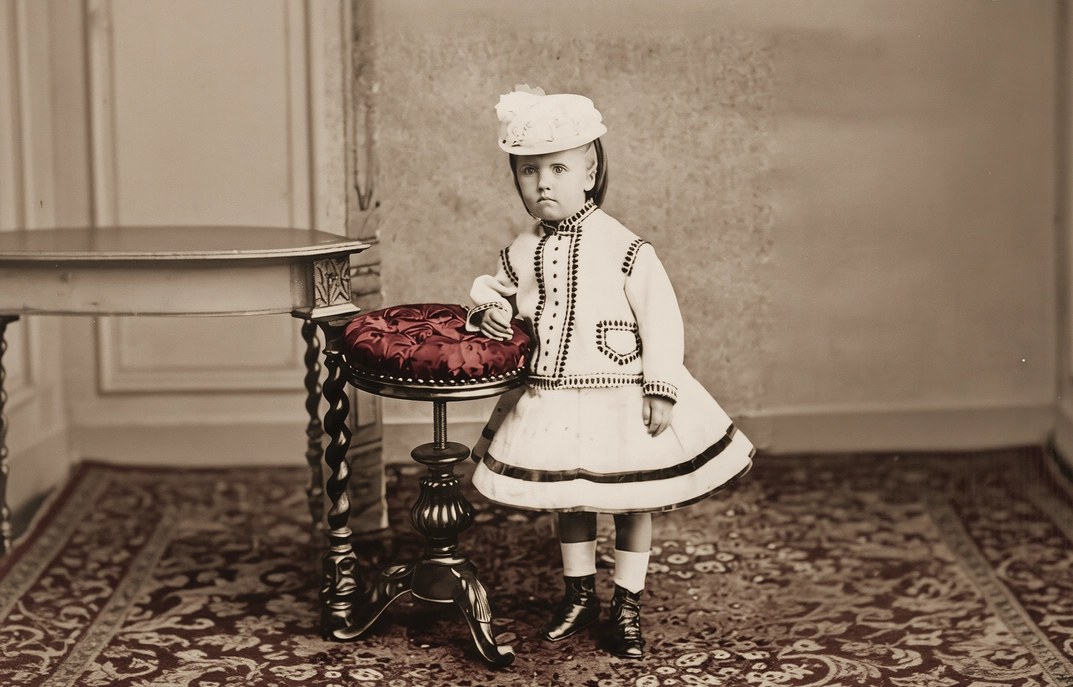
<p class="text-text-100 mt-3 -mb-1 text-[1.125rem] font-bold"><img src="https://static.super.website/fs/super-website/userFiles/focusnova/uploaded-media/winnaretta-1868-17802538922585.webp" alt="Winnaretta Singer, age three, in a studio portrait taken around 1868. Born in Yonkers, New York, on January 8, 1865, she was brought to Paris by her parents — Isaac Merritt Singer and Isabella Boyer — shortly before her third birthday. Within a generation, this child would become the most influential music patron in Europe." width="728" height="466" data-width="720" data-height="461"></img></p>
<p class="text-text-100 mt-3 -mb-1 text-[1.125rem] font-bold"><em>Winnaretta Singer at three, around 1868 — the sewing-machine heiress who would become Europe's foremost music patron.</em></p>
<h2 class="text-text-100 mt-3 -mb-1 text-[1.125rem] font-bold"> </h2>
<h2 class="text-text-100 mt-3 -mb-1 text-[1.125rem] font-bold"><span style="font-size: 38px; color: #000000;">A salon run like a factory</span></h2>
<p class="font-claude-response-body break-words whitespace-normal leading-[1.7]"> </p>
<p class="font-claude-response-body break-words whitespace-normal leading-[1.7]"><span style="color: #000000;">After her husband's death in 1901 Winnaretta turned the fortune into patronage — and ran it with the grip of a managing director. When she commissioned a work, she imposed terms closer to an industrial contract: the première had to happen in her salon; the dedication was hers; the signed manuscript was hers; the composer owed her a piano reduction for private hearings; an advance, then the balance on delivery; and six months' exclusivity, performed nowhere else without her consent.</span></p>
<p class="font-claude-response-body break-words whitespace-normal leading-[1.7]"><span style="color: #000000;">Her father industrialized the stitch. She industrialized the commission. Out of that system came much of what we now call musical modernism.</span></p>
<p class="font-claude-response-body break-words whitespace-normal leading-[1.7]"> </p>
<blockquote class="ml-2 border-l-4 border-border-300/10 pl-4 text-text-300">
<p class="font-claude-response-body break-words whitespace-normal leading-[1.7]"><span style="font-size: 22px; color: #000000;"><strong>"Alone in an armchair, the princess listens, and nothing escapes her. She says not a word, she never interrupts. But at the very end she sums up: 'Here is what I would do, in your place.'"</strong> — Albert Flament, <em>La Revue de Paris</em>, 1937</span></p>
</blockquote>
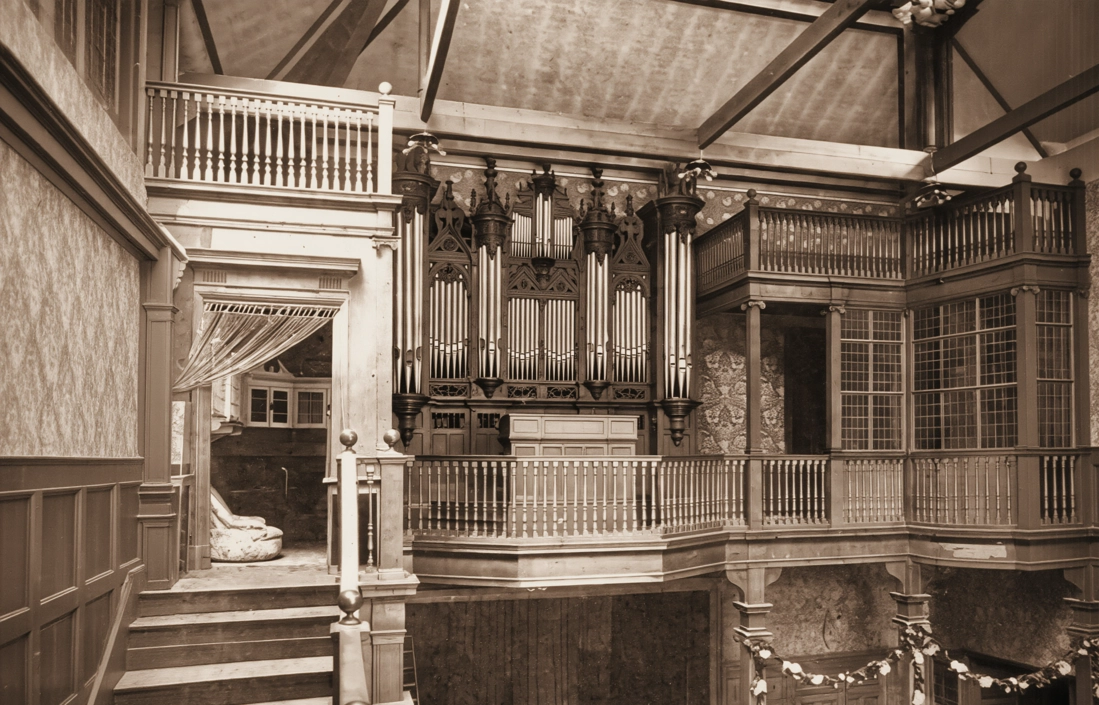
<p class="text-text-100 mt-3 -mb-1 text-[1.125rem] font-bold"><img src="https://static.super.website/fs/super-website/userFiles/focusnova/uploaded-media/la-premiere-propriete-1887-1903-17802540549225.webp" alt="The music studio of Winnaretta Singer's first Paris hôtel, fitted with a large pipe organ — almost certainly built by Aristide Cavaillé-Coll, the master organ-builder of Notre-Dame and Saint-Sulpice. Winnaretta was herself an accomplished organist, trained from childhood; her preferred instruments were never the salon piano or the harp but the organ and the harpsichord. From this room, between 1887 and the turn of the century, she launched the patronage that would define her life." width="729" height="468" data-width="726" data-height="466"></img></p>
<p class="text-text-100 mt-3 -mb-1 text-[1.125rem] font-bold"><em>Her music studio on the rue Cortambert, built to seat an orchestra and two hundred guests, with a Cavaillé-Coll organ she played herself.</em></p>
<h2 class="text-text-100 mt-3 -mb-1 text-[1.125rem] font-bold"> </h2>
<h2 class="text-text-100 mt-3 -mb-1 text-[1.125rem] font-bold"><span style="font-size: 38px; color: #000000;">What the money brought into the world</span></h2>
<p class="font-claude-response-body break-words whitespace-normal leading-[1.7]"> </p>
<p class="font-claude-response-body break-words whitespace-normal leading-[1.7]"><span style="color: #000000;">Not "art in general" — specific scores, paid for with sewing money:</span></p>
<ul>
<li class="font-claude-response-body whitespace-normal break-words pl-2"><strong>Igor Stravinsky</strong> — <em>Renard</em>, commissioned 1915. She gave <em>Les Noces</em> its private première in her own salon on 10 June 1923, three days before the Ballets Russes unveiled it to the public.</li>
<li class="font-claude-response-body whitespace-normal break-words pl-2"><strong>Erik Satie</strong> — <em>Socrate</em> (1916), grown from her passion for Plato.</li>
<li class="font-claude-response-body whitespace-normal break-words pl-2"><strong>Manuel de Falla</strong> — <em>El retablo de maese Pedro</em> (1923).</li>
<li class="font-claude-response-body whitespace-normal break-words pl-2"><strong>Francis Poulenc</strong> — Concerto for Two Pianos (1932) and Organ Concerto (1938).</li>
</ul>
<blockquote class="ml-2 border-l-4 border-border-300/10 pl-4 text-text-300">
<p class="font-claude-response-body break-words whitespace-normal leading-[1.7]"><span style="font-size: 22px; color: #000000;"><strong>"The sun lit the most beautiful Monet I know — a field of tulips near Haarlem."</strong> — Marcel Proust, on an afternoon in her salon, <em>Le Figaro</em>, 1903</span></p>
</blockquote>
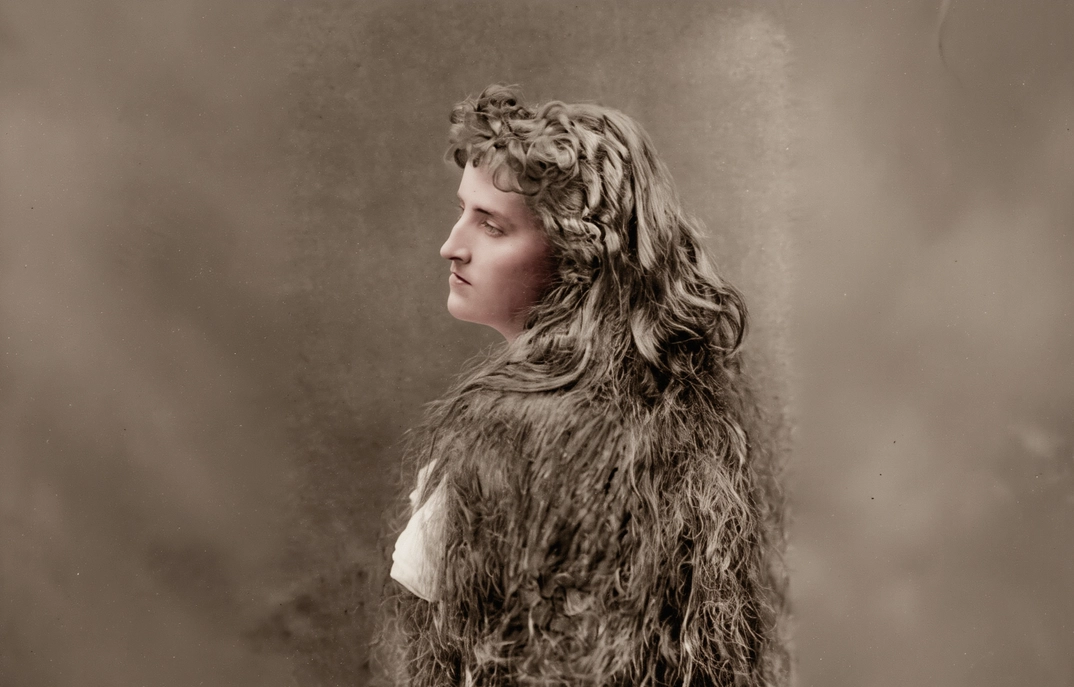
<p class="text-text-100 mt-3 -mb-1 text-[1.125rem] font-bold"><img src="https://static.super.website/fs/super-website/userFiles/focusnova/uploaded-media/winnaretta-1883-17802541754179.webp" alt="Winnaretta Singer at eighteen, in a studio portrait from 1883. The loose, unbound hair — a deliberate art-portrait convention of the period — signals that she is still unmarried; in four years she would be obliged by her mother to accept Prince Louis de Scey-Montbéliard. The marriage lasted five years before annulment. The hair, by then, was already up." width="726" height="464" data-width="726" data-height="464"></img></p>
<p class="text-text-100 mt-3 -mb-1 text-[1.125rem] font-bold"><em>Winnaretta at eighteen, 1883 — four years before her mother married her to Prince Louis de Scey-Montbéliard.</em></p>
<h2 class="text-text-100 mt-3 -mb-1 text-[1.125rem] font-bold"> </h2>
<h2 class="text-text-100 mt-3 -mb-1 text-[1.125rem] font-bold"><span style="font-size: 38px; color: #000000;">Not just music: science, concrete and the Louvre</span></h2>
<p class="font-claude-response-body break-words whitespace-normal leading-[1.7]"> </p>
<p class="font-claude-response-body break-words whitespace-normal leading-[1.7]"><span style="color: #000000;">The sewing money reached far beyond the salon.</span></p>
<p class="font-claude-response-body break-words whitespace-normal leading-[1.7]"><span style="color: #000000;">She helped fund the research of <strong>Marie Curie</strong>. She paid for <strong>Le Corbusier's</strong> Cité de Refuge for the Salvation Army — modernist architecture built to shelter the destitute. In 1928 she gave her patronage legal form, founding, with Raymond Poincaré and Maurice Paléologue, the <strong>Fondation Singer-Polignac</strong>, which to this day, nearly a century on, supports the arts, letters and sciences from her old mansion near the Trocadéro.</span></p>
<p class="font-claude-response-body break-words whitespace-normal leading-[1.7]"><span style="color: #000000;">She left her own pictures — Monet, Manet, Tiepolo, Ingres, Whistler — to the <strong>Louvre</strong>, and endowed an anonymous fund that let the museum (and, from 1986, the Musée d'Orsay) acquire more than a hundred further works. The girl once asked to help catalogue the Louvre ended up filling its rooms.</span></p>
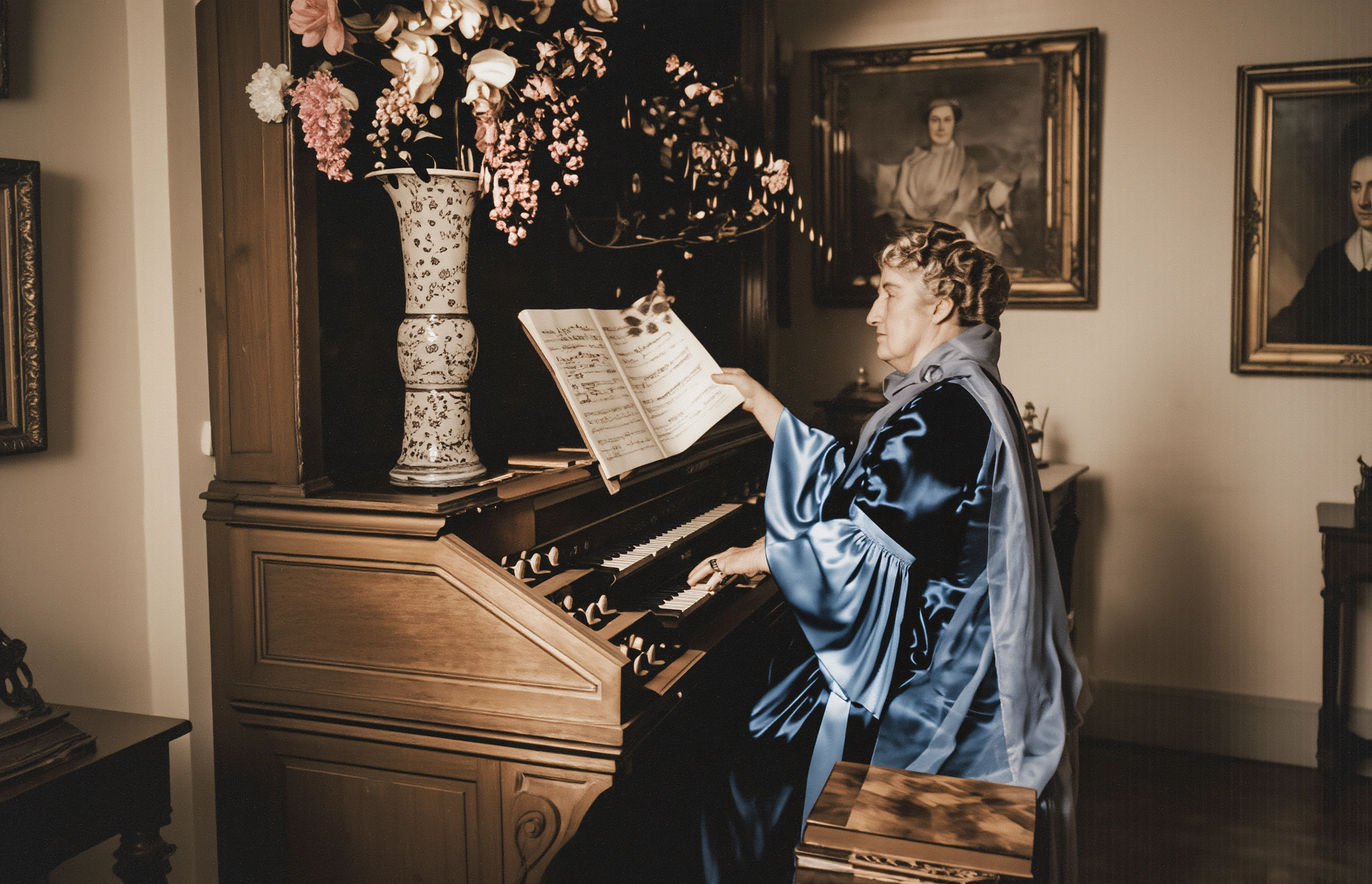
<p class="font-claude-response-body break-words whitespace-normal leading-[1.7]"><span style="color: #000000;"><img src="https://static.super.website/fs/super-website/userFiles/focusnova/uploaded-media/princesse-entre-le-premier-concert-17802444382601.webp" alt="The Princesse de Polignac at her harmonium in her later years, probably the early 1930s. A working musician to the end, she studied each commissioned manuscript at the keyboard before it premiered in her salon. Behind her, the family portraits her father's fortune purchased the right to hang alongside." width="729" height="469" data-width="727" data-height="468"></img></span></p>
<p class="font-claude-response-body break-words whitespace-normal leading-[1.7]"><em><span style="color: #000000;">A working musician to the end: the Princesse de Polignac studying a score at the keyboard, early 1930s.</span></em></p>
<h2 class="text-text-100 mt-3 -mb-1 text-[1.125rem] font-bold"> </h2>
<h2 class="text-text-100 mt-3 -mb-1 text-[1.125rem] font-bold"><span style="font-size: 38px; color: #000000;">The echoes of her father</span></h2>
<p class="font-claude-response-body break-words whitespace-normal leading-[1.7]"> </p>
<p class="font-claude-response-body break-words whitespace-normal leading-[1.7]"><span style="color: #000000;">Here the story turns genuinely strange — because everything the daughter built rhymes with the father she half-worshipped.</span></p>
<p class="font-claude-response-body break-words whitespace-normal leading-[1.7]"><span style="color: #000000;"><strong>The name.</strong> Isaac drove the word <em>Singer</em> in gold into cast iron, from Podolsk to Glasgow. Edmond cursed that name at an auction — then carried it himself. His daughter signed her canvases with it. Today it is a scientific foundation. The name of a cheap machine travelled all the way to an institution that funds physics and music.</span></p>
<p class="font-claude-response-body break-words whitespace-normal leading-[1.7]"><span style="color: #000000;"><strong>Perfection.</strong> Her father "perfected the machine," driving mechanics to an absolute. With the same instinct for precision, his daughter drove other people's raw talent onto the stage.</span></p>
<p class="font-claude-response-body break-words whitespace-normal leading-[1.7]"><span style="color: #000000;"><strong>The will.</strong> Of thirteen million dollars Isaac shared generously among a score of children — but to his eldest son William, who had dared side with the abandoned mother in court, he left five hundred. Revenge from the grave. Winnaretta turned her own share into Stravinsky and Curie.</span></p>
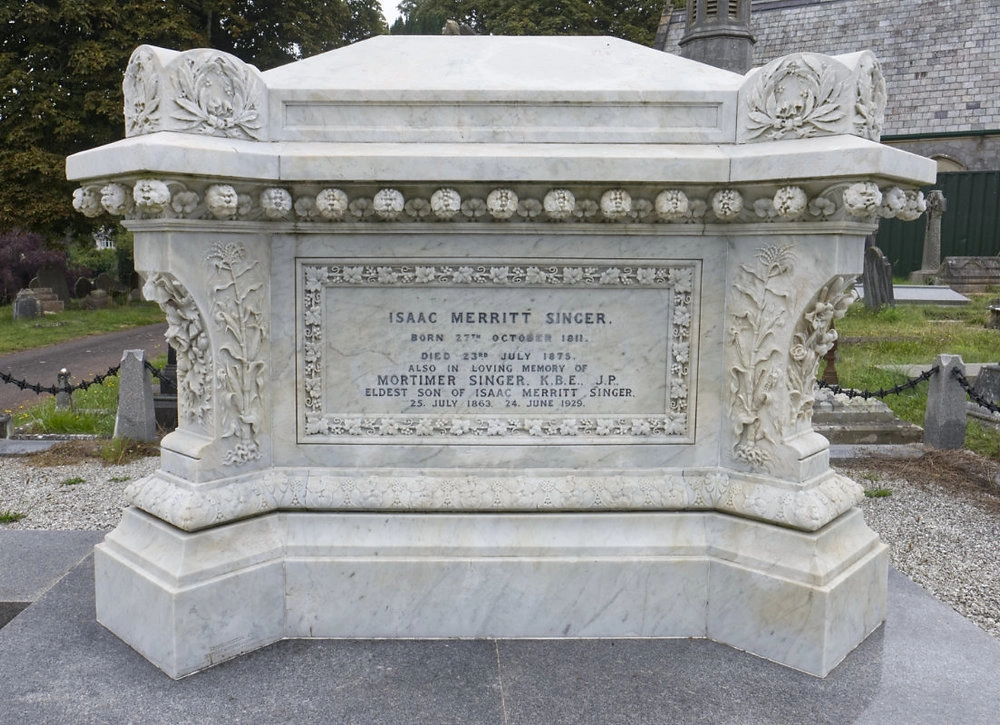
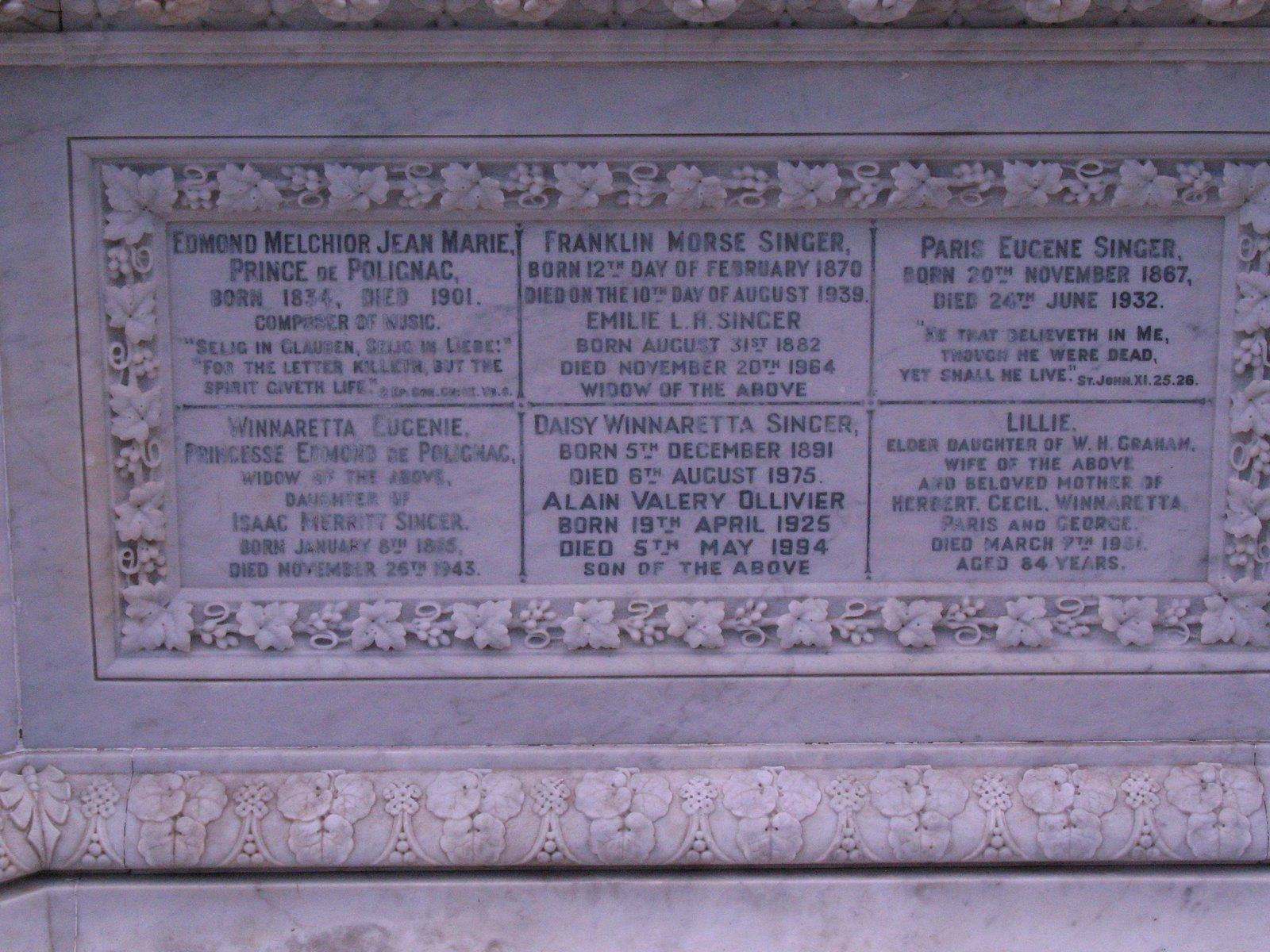
<p class="font-claude-response-body break-words whitespace-normal leading-[1.7]"><span style="color: #000000;"><strong>The ground.</strong> Father, husband and Winnaretta herself lie in one and the same Singer crypt in Torquay, Devon — the runaway apprentice, the French prince and the princess of the avant-garde, under one name on the stone.</span></p>
<p class="font-claude-response-body break-words whitespace-normal leading-[1.7]"><span style="color: #000000;">And the central paradox. Isaac Singer had little use for women — except in bed and in his will. He gave them no freedom: the seamstress still sat over a stranger's dress until dawn. But the machine collapsed the cost of an hour, and those hours were finally worth something — a woman could feed her children, set up her own shop, survive where the men did not come home from the war. His daughter, with the very same coins, bought a century its music and its science. The greed went in; civilization came out.</span></p>
<p class="font-claude-response-body break-words whitespace-normal leading-[1.7]"><span style="color: #000000;">There is a lovely legend that the sculptor Bartholdi gave the Statue of Liberty the face of Isaac's wife, Isabella. The image fits. The whole family met the immigrants in one harbour: his name on the iron of the machine, her face on the copper of the torch — while down the gangway came the women who would bend over that iron, and survive by it.</span></p>
<p class="font-claude-response-body break-words whitespace-normal leading-[1.7]"><span style="color: #000000;"><img src="https://static.super.website/fs/super-website/userFiles/focusnova/uploaded-media/надгробие-детейзингера-17802449353639.webp" alt="The Singer family memorial at Torquay Cemetery in Devon, England — adjoining the marble mausoleum where Isaac Merritt Singer himself was buried in 1875. Inscribed here are three of his children by Isabella Boyer: Winnaretta Eugénie, Princesse de Polignac (1865–1943); Paris Eugene Singer (1867–1932); Franklin Morse Singer (1870–1939); together with Winnaretta's husband Prince Edmond de Polignac, Paris's English wife Lillie Graham, and grandchildren. From a New York scoundrel's grave in a Devon cemetery, an entire European dynasty traces back." width="728" height="546" data-width="1460" data-height="1095"></img></span></p>
<p class="font-claude-response-body break-words whitespace-normal leading-[1.7]"><em><span style="color: #000000;">The Singer family memorial at Torquay, Devon — Winnaretta lies here beside her husband Edmond and her father Isaac, under one name.</span></em></p>
<h2 class="text-text-100 mt-3 -mb-1 text-[1.125rem] font-bold"> </h2>
<h2 class="text-text-100 mt-3 -mb-1 text-[1.125rem] font-bold"><span style="font-size: 38px; color: #000000;">The needle that outlasted the marble</span></h2>
<p class="font-claude-response-body break-words whitespace-normal leading-[1.7]"> </p>
<p class="font-claude-response-body break-words whitespace-normal leading-[1.7]"><span style="color: #000000;">How a penniless runaway apprentice built the empire that paid for all this is the spine of the book <strong>Singer: The Scoundrel Who Changed the World</strong>, out <strong>12 August 2026</strong>, on the 175th anniversary of patent No. 8,294. This scene — Winnaretta at the organ, the machine below, two women separated by a hundred steps and a whole world — is where it ends.</span></p>
<ul>
<li class="font-claude-response-body whitespace-normal break-words pl-2"> </li>
</ul>
<ul>
<li class="font-claude-response-body whitespace-normal break-words pl-2"> </li>
</ul>
<blockquote class="ml-2 border-l-4 border-border-300/10 pl-4 text-text-300">
<p class="font-claude-response-body break-words whitespace-normal leading-[1.7]"><strong><span style="color: #000000; font-size: 22px;">Marble guards the dead; the needle, the living.</span></strong></p>
</blockquote>
<p> </p>
<hr class="border-border-200 border-t-0.5 my-3 mx-1.5"></hr>
<p class="font-claude-response-body break-words whitespace-normal leading-[1.7]"><span style="color: #000000;"><strong>Historical photographs have been digitally restored and enhanced with AI; the memorial photograph is contemporary.</strong></span></p>
<p class="font-claude-response-body break-words whitespace-normal leading-[1.7]"> </p>
<p class="font-claude-response-body break-words whitespace-normal leading-[1.7]"><span style="color: #000000;"><strong>Sources:</strong> Sylvia Kahan, <em>Music's Modern Muse</em> (2003); Ruth Brandon, <em>Singer and the Sewing Machine</em> (1977); Fondation Singer-Polignac (singer-polignac.org); Marcel Proust, <em>Le Figaro</em>, 1903; Albert Flament, <em>La Revue de Paris</em>, 1937.</span></p>
<p> </p>
<hr></hr>
<p style="text-align: center;"><span style="font-size: 38px;">Read more</span></p>
<p style="text-align: center;"> </p>
<p style="text-align: center;"><a href="https://www.singerseries.com/singer-journal/singer-project/edward-clark-singer-empire" target="_blank" rel="noopener noreferrer"><span style="font-size: 18px; color: #270101;"><strong>Edward Clark: The Lawyer Who Built the Singer Empire</strong></span></a> — the quiet partner who turned Singer's chaos into the world's first global consumer brand. The man behind the Dakota.</p>
<p style="text-align: center;"><span style="color: #270101; font-size: 18px;"><a style="color: #270101;" href="https://www.singerseries.com/singer-journal/singer-project/the-hungry-wolf-in-a-golden-muzzle-who-was-isaac-singer" target="_blank" rel="noopener noreferrer"><strong>The Hungry Wolf in a Golden Muzzle: Who Was Isaac Singer?</strong></a></span> — runaway apprentice, failed Shakespearean actor, bigamist with five families and twenty-four children — the "scoundrel" who perfected the sewing machine and changed the world.<br><span style="color: #270101;"><a style="color: #270101;" href="/{{pageId:1}}" target="_blank" rel="noopener noreferrer"><strong><span style="font-size: 18px;">About Singer Series</span></strong></a></span> — the book, the series, the film. One story. Three formats.</p>
<hr></hr>
<p style="text-align: center;"><strong><span style="color: #000000;">Subscribe to the Singer Series and receive the first chapter of   </span></strong><span style="font-size: 18px;"><a href="https://singer-book.com" target="_blank" rel="noopener noreferrer"><span style="color: #270101;">SINGER: <span class="red">The Scoundrel </span>Who Changed the World</span></a>  <strong><span style="color: #000000;">free before publication.</span></strong></span><strong><span style="color: #000000;">            <a class="btn buttons1474874760576" contenteditable="false" href="https://t.me/SingerSeriesBot?start=chapter1" target="_blank" rel="noopener">Get the chapter 1</a></span></strong></p>
<hr></hr>
<p> </p>]]>
            </summary>
                            <link rel="enclosure" href="https://static.super.website/fs/super-website/userFiles/focusnova/images/a-3-winarretta-singer-178024584272.png" length="1051385" type="image/png" />
                        <category term="Singer Project" />
            <updated>2026-05-31T13:29:20+00:00</updated>
                            <dc:description><![CDATA[Her father&#039;s sewing machine made millions off seamstresses. His daughter spent it on Stravinsky, Satie and Marie Curie. The strange afterlife of the Singer fortune.]]></dc:description>
                    </entry>
            <entry>
            <title><![CDATA[Edward Clark: The Lawyer Who Built the Singer Empire]]></title>
            <link rel="alternate" href="https://www.singerseries.com/singer-journal/singer-project/edward-clark-singer-empire" />
            <id>https://www.singerseries.com/singer-journal/singer-project/edward-clark-singer-empire</id>
            <author>
                <name><![CDATA[Юрий Сергеевич Болдырев]]></name>
                                    <email><![CDATA[chanko@mail.ru]]></email>
                            </author>
            <summary type="html">
                <![CDATA[<p class="font-claude-response-body break-words whitespace-normal leading-[1.7]"> </p>
<p class="font-claude-response-body break-words whitespace-normal leading-[1.7]"><span style="color: #000000;">The Singer brand needed a face. Isaac Singer gave it one — six foot five, broad-shouldered, bearded, a former Shakespearean actor who could fill a hall and a scandal with equal ease. But every empire of any consequence has a second man, the one who never appears in the official portrait. The one who keeps the lights on while the founder is out signing autographs or escaping the law.</span></p>
<p class="font-claude-response-body break-words whitespace-normal leading-[1.7]"><span style="color: #000000;">Behind the Singer brand stood a Manhattan lawyer named <strong>Edward Clark</strong>. He kept his suits dark and his sentences long. He taught Sunday school. He never once entered the public mind the way his partner did. And he did three things that made the modern consumer economy possible: he engineered the first patent pool in American industry, he invented the installment plan, and he ran the company while the founder hid in Europe.</span></p>
<p class="font-claude-response-body break-words whitespace-normal leading-[1.7]"><span style="color: #000000;">By the time he died in 1882, his estate was estimated at twenty-five to fifty million dollars — about double Isaac Singer's. The building he commissioned the year before he died, on the corner of Seventy-second Street and Central Park West, became one of the most famous addresses in the world. Clark never saw the Dakota finished. But the system he built — credit, retail networks, brand discipline, patent diplomacy — is what most of us walked through this morning without noticing.</span></p>
<p class="font-claude-response-body break-words whitespace-normal leading-[1.7]"><span style="color: #000000;">This is his story.</span></p>
<p class="font-claude-response-body break-words whitespace-normal leading-[1.7]"> </p>
<hr class="border-border-200 border-t-0.5 my-3 mx-1.5"></hr>
<h2 class="text-text-100 mt-3 -mb-1 text-[1.125rem] font-bold"><span style="color: #000000;">From Athens to Williams College</span></h2>
<p> </p>
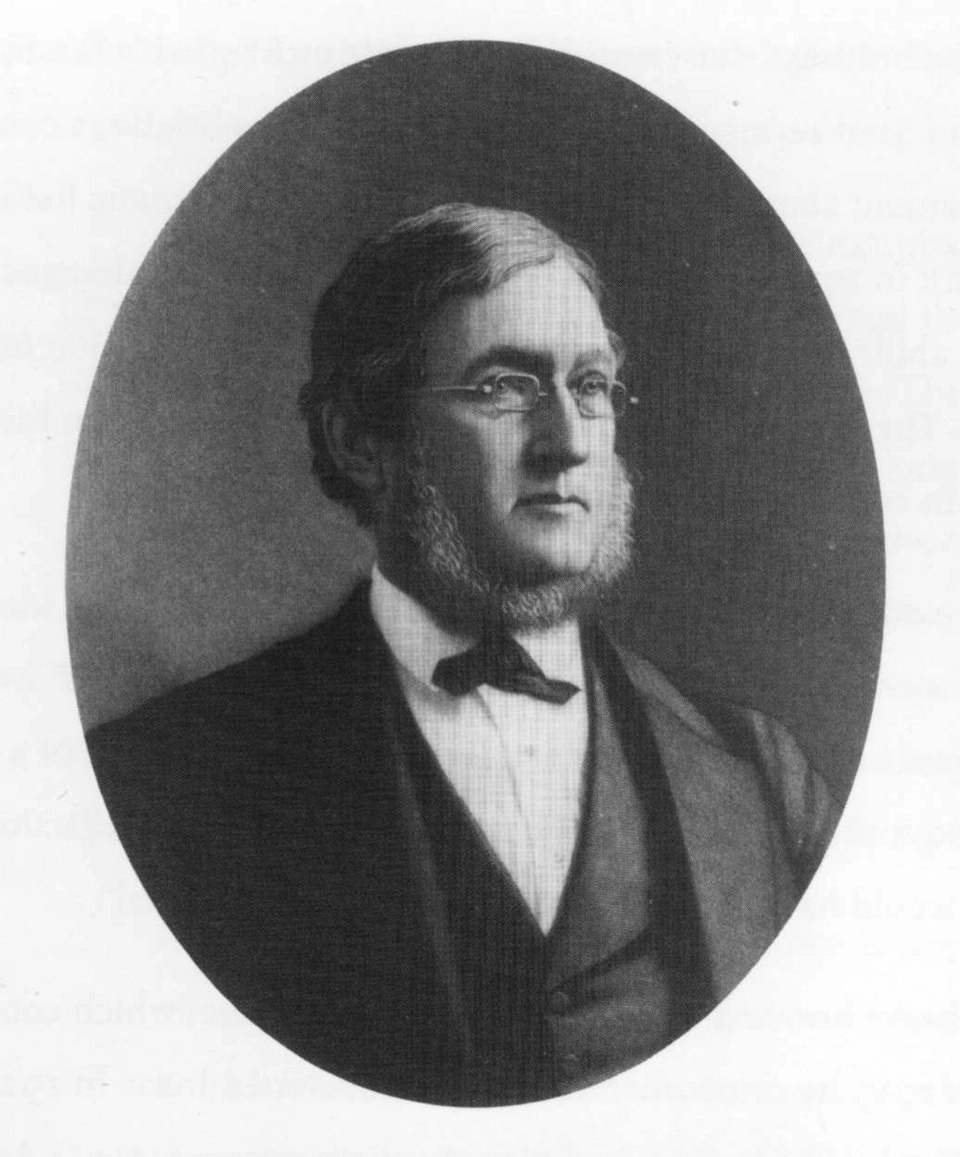
<p class="font-claude-response-body break-words whitespace-normal leading-[1.7]"><span style="color: #000000;"><strong>Edward Cabot Clark</strong> was born on December 19, 1811, in Athens, Greene County, New York — a Hudson River town his grandfather had helped settle. His father, Nathan Clark, ran the Athens Pottery Works, one of the most successful potteries in the region. The family was Protestant, prosperous, and the kind that understood education as both inheritance and weapon.</span></p>
<p class="font-claude-response-body break-words whitespace-normal leading-[1.7]"><span style="color: #000000;">After four years at Lenox Academy in Massachusetts, where he absorbed Latin and Greek, Clark entered Williams College in 1826. He graduated in 1831 with a tolerable academic record and the credential that mattered most in mid-nineteenth-century America: a network. From Williams he moved into the law office of Ambrose L. Jordan, a former Attorney General of the State of New York. Three years later, he passed the bar. In 1835, he married Caroline Jordan — Ambrose's daughter — and joined his father-in-law's firm. Jordan &amp; Clark, on Nassau Street in lower Manhattan, became one of the better-known patent practices in the city.</span></p>
<p class="font-claude-response-body break-words whitespace-normal leading-[1.7]"><span style="color: #000000;">By the 1840s Clark had a steady reputation, a comfortable Manhattan address, and a methodical practice. None of it was unusual. None of it predicted what was about to happen.</span></p>
<p class="font-claude-response-body break-words whitespace-normal leading-[1.7]"> </p>
<p class="font-claude-response-body break-words whitespace-normal leading-[1.7]"><span style="color: #000000;"><img src="https://static.super.website/fs/super-website/userFiles/focusnova/uploaded-media/edwardclark1850-17782688424064.webp" alt="Edward Cabot Clark" width="438" height="528" data-width="438" data-height="528"></img></span></p>
<p class="font-claude-response-body break-words whitespace-normal leading-[1.7]"><span style="color: #000000;"><strong><span style="font-size: 18px;"><em>Edward Cabot Clark</em></span></strong></span></p>
<p class="font-claude-response-body break-words whitespace-normal leading-[1.7]"> </p>
<hr class="border-border-200 border-t-0.5 my-3 mx-1.5"></hr>
<h2 class="text-text-100 mt-3 -mb-1 text-[1.125rem] font-bold"><span style="color: #000000;">The meeting with Singer</span></h2>
<p> </p>
<p class="font-claude-response-body break-words whitespace-normal leading-[1.7]"><span style="color: #000000;"><strong>Isaac Merritt Singer</strong> walked into Jordan &amp; Clark in <span style="font-family: 'Playfair Display';">1851</span> with a patent he could not afford to defend. His improved sewing machine — not invented from scratch but assembled, the way nearly everything important in early-nineteenth-century American technology was assembled — was nearly ready for production. The original company was I. M. Singer &amp; Co. in name only. Behind it stood George B. Zieber, a Philadelphia publisher who had financed Singer through years of failure and was the only man on earth who had backed him before there was anything to back. But Elias Howe, the holder of the foundational lockstitch patent, was preparing to demand twenty-five dollars in royalties on every machine sold. The number made the business unworkable.</span></p>
<p class="font-claude-response-body break-words whitespace-normal leading-[1.7]"><span style="color: #000000;">Clark agreed to take the case. Singer had no money to pay him. So he offered three-eighths of the future company instead — thirty-seven and a half percent, in lieu of fees. Clark accepted.</span></p>
<p class="font-claude-response-body break-words whitespace-normal leading-[1.7]"><span style="color: #000000;">This is the deal that made the entire Singer empire. Almost no one knows about it.</span></p>
<h3 class="text-text-100 mt-2 -mb-1 text-base font-bold"> </h3>
<h3 class="text-text-100 mt-2 -mb-1 text-base font-bold"><span style="color: #000000;">Patent No. 8294</span></h3>
<p> </p>
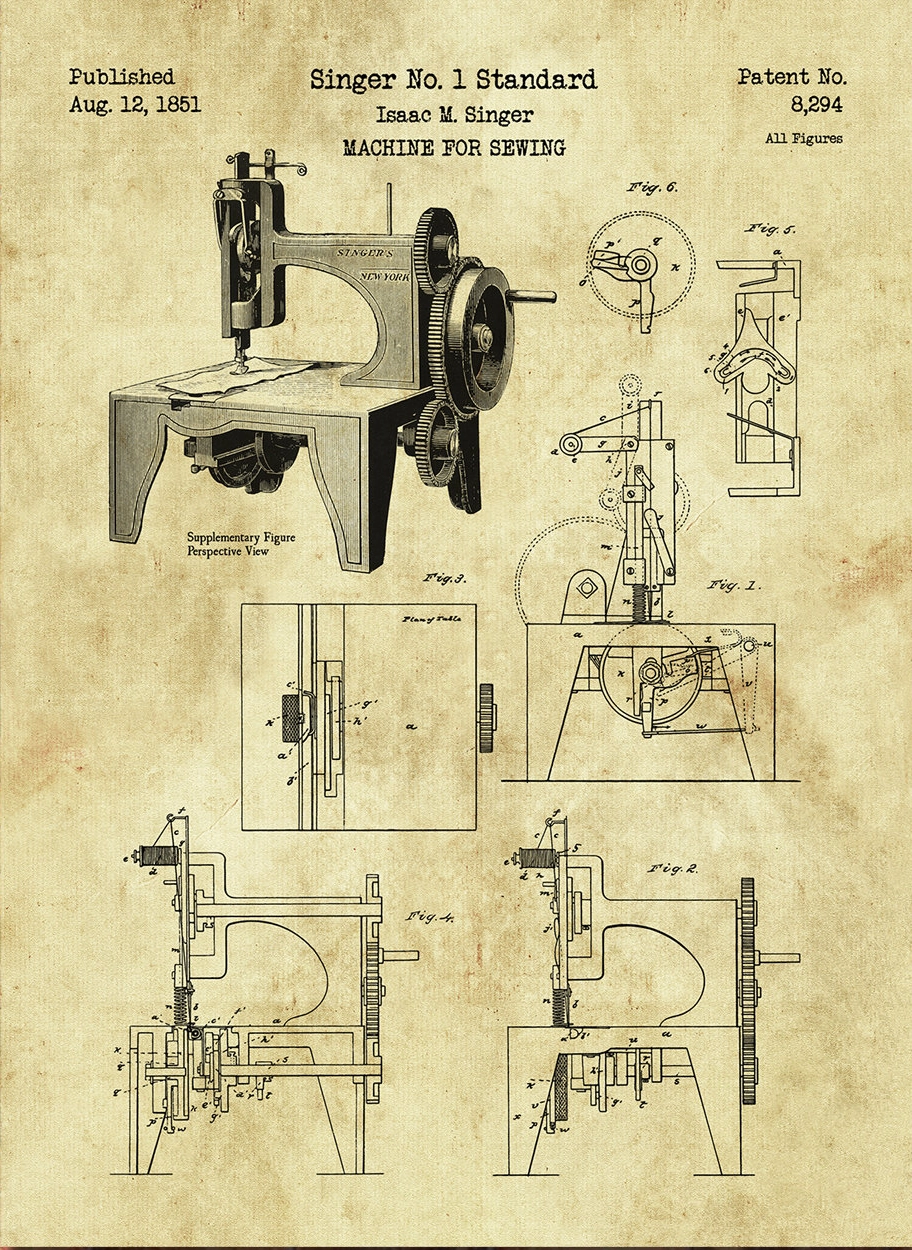
<p class="font-claude-response-body break-words whitespace-normal leading-[1.7]"><span style="color: #000000;">On August 12, 1851, the U.S. Patent Office issued <strong>Patent No. 8294</strong> to Isaac Merritt Singer for an improved sewing machine featuring a vertical needle, a continuous wheel feed, and tension regulation. That same month, Clark and Singer registered I. M. Singer &amp; Co. The lawyer was no longer a lawyer at the table. He was a part-owner of an industry that did not yet exist.</span></p>
<p class="font-claude-response-body break-words whitespace-normal leading-[1.7]"><span style="color: #000000;">Within a few years Zieber was gone. Singer and Clark — Singer leading, Clark drafting the documents — pushed him out of the company through a combination of pressure, illness, and opaque accounting. Zieber would later write, in a line that has survived him better than the company stock he was robbed of: <em>"If I had been suddenly condemned to be shot I could not have been more stunned.</em><em>"</em> The man who had funded Singer when no one else would was the first casualty of the partnership that replaced him.</span></p>
<p class="font-claude-response-body break-words whitespace-normal leading-[1.7]"><span style="color: #000000;">What followed was the deeper work — turning a mechanical curiosity into a global brand.</span></p>
<p class="font-claude-response-body break-words whitespace-normal leading-[1.7]"> </p>
<p class="font-claude-response-body break-words whitespace-normal leading-[1.7]"><span style="color: #000000;"><img src="https://static.super.website/fs/super-website/userFiles/focusnova/uploaded-media/sewing-machine-patent-isaac-singer-1778264751023.webp" alt="Sewing Machine Patent; Isaac Singer" width="351" height="481" data-width="351" data-height="481"></img></span></p>
<p class="text-text-100 mt-2 -mb-1 text-base font-bold"><span style="font-size: 18px; color: #000000;"><em>Patent No. 8294</em></span></p>
<p class="font-claude-response-body break-words whitespace-normal leading-[1.7]"> </p>
<hr class="border-border-200 border-t-0.5 my-3 mx-1.5"></hr>
<h2 class="text-text-100 mt-3 -mb-1 text-[1.125rem] font-bold"><span style="color: #000000;">The patent wars and the invention of the patent pool</span></h2>
<p> </p>
<p class="font-claude-response-body break-words whitespace-normal leading-[1.7]"><span style="color: #000000;">By the mid-1850s, the American sewing machine industry had collapsed into legal warfare. Howe was suing nearly every manufacturer. Wheeler &amp; Wilson was suing Howe. Grover &amp; Baker was suing both. The companies were spending more on attorneys than on machines. In trade journals of the period, the years from 1853 to 1856 became known as the <strong>Sewing Machine Wars</strong>.</span></p>
<p class="font-claude-response-body break-words whitespace-normal leading-[1.7]"><span style="color: #000000;">Clark wasn't an inventor. He was something rarer — someone who understood the architecture of intellectual property the way Singer understood the architecture of a needle. In October 1856, before another federal trial in Albany, Clark and a competing attorney named Orlando B. Potter proposed something that had never been done in American industry: pool the patents.</span></p>
<h3 class="text-text-100 mt-2 -mb-1 text-base font-bold"> </h3>
<h3 class="text-text-100 mt-2 -mb-1 text-base font-bold"><span style="color: #000000;">The Sewing Machine Combination</span></h3>
<p> </p>
<p class="font-claude-response-body break-words whitespace-normal leading-[1.7]"><span style="color: #000000;">The four major manufacturers — I. M. Singer &amp; Co., Wheeler &amp; Wilson, Grover &amp; Baker, and Howe himself — agreed to combine their nine essential patents into a single licensing trust. The <strong>Sewing Machine Combination</strong>, as it was called, charged a fixed royalty per machine to anyone in the United States who wanted to use the protected technology. Howe received a privileged five dollars on every machine sold domestically and one dollar on every machine exported. Twenty-four manufacturers eventually licensed in. The pool's profits were divided among the four founders.</span></p>
<p class="font-claude-response-body break-words whitespace-normal leading-[1.7]"><span style="color: #000000;">Within a year the litigation stopped. Within a decade the global sewing machine industry was the largest consumer goods sector in the world.</span></p>
<p class="font-claude-response-body break-words whitespace-normal leading-[1.7]"><span style="color: #000000;">The Sewing Machine Combination ran for twenty-one years, until the last patent expired in 1877. It became the template for every patent pool that came after — in radio, in aviation, in cinema, eventually in semiconductors. Clark didn't claim authorship publicly. He didn't need to. He had made it work.</span></p>
<p class="font-claude-response-body break-words whitespace-normal leading-[1.7]"> </p>
<p class="font-claude-response-body break-words whitespace-normal leading-[1.7]"><span style="color: #000000;"><img src="https://static.super.website/fs/super-website/userFiles/focusnova/uploaded-media/elias-howe-and-his-sewing-machine-17782660898705.webp" alt="Elias Howe and his sewing machine." width="803" height="491" data-width="846" data-height="517"></img></span></p>
<p class="font-claude-response-body break-words whitespace-normal leading-[1.7]"><span style="font-size: 18px; color: #000000;"><em>Elias Howe and his sewing machine.</em></span></p>
<p class="font-claude-response-body break-words whitespace-normal leading-[1.7]"> </p>
<hr class="border-border-200 border-t-0.5 my-3 mx-1.5"></hr>
<h2 class="text-text-100 mt-3 -mb-1 text-[1.125rem] font-bold"><span style="color: #000000;">Hire-purchase: how Clark invented consumer credit</span></h2>
<p> </p>
<p class="font-claude-response-body break-words whitespace-normal leading-[1.7]"><span style="color: #000000;">Even with the patents settled, Singer machines had a problem. The price.</span></p>
<p class="font-claude-response-body break-words whitespace-normal leading-[1.7]"><span style="color: #000000;">A sewing machine cost one hundred twenty-five dollars in 1856. The average American family income that year was about five hundred. Clark eventually pushed the price down toward one hundred — still beyond reach for the women he wanted to sell to. Reaching them required something the country didn't yet have.</span></p>
<p class="font-claude-response-body break-words whitespace-normal leading-[1.7]"><span style="color: #000000;">So he invented it.</span></p>
<p class="font-claude-response-body break-words whitespace-normal leading-[1.7]"><span style="color: #000000;">In 1856, Clark introduced the Singer <strong>hire-purchase plan</strong>: five dollars down, five dollars a month until the machine was paid off. Later iterations went further — one dollar a day, one dollar a week, custom rental terms for different income brackets. A farm wife in Iowa or Kansas could order the machine by mail, receive it within weeks, and pay for it in egg-and-butter money over a year. While she paid, the machine was already working. The Edward Clark Singer installment plan would, within a generation, become the template for how Americans bought everything.</span></p>
<p class="font-claude-response-body break-words whitespace-normal leading-[1.7]"><span style="color: #000000;">Singer sold machines. Clark sold time.</span></p>
<p class="font-claude-response-body break-words whitespace-normal leading-[1.7]"><span style="color: #000000;">Greed didn't invent capitalism. Patience and a payment book did.</span></p>
<h3 class="text-text-100 mt-2 -mb-1 text-base font-bold"> </h3>
<h3 class="text-text-100 mt-2 -mb-1 text-base font-bold"><span style="color: #000000;">The showroom on Broadway</span></h3>
<p> </p>
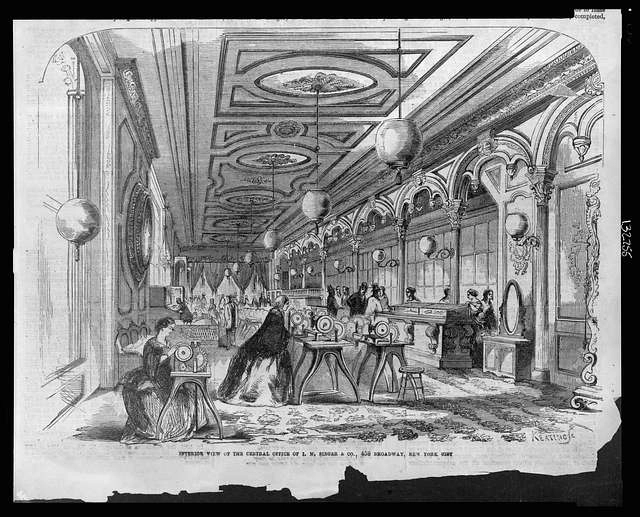
<p class="font-claude-response-body break-words whitespace-normal leading-[1.7]"><span style="color: #000000;">Contemporary accounts of the Singer showrooms describe rooms that were marble-floored and gas-lit, with plate-glass windows that put the machines on display the way a jeweler displayed a ring. Behind a counter sat a young woman — most demonstrators were women, hired and salaried for the purpose — paid to do one thing well: stitch a hem on a piece of cambric while a customer watched.</span></p>
<p class="font-claude-response-body break-words whitespace-normal leading-[1.7]"><span style="color: #000000;">The customer was almost always a woman too. She watched the needle rise and fall, felt the absence of her own three hours of finishing the seam by hand, and signed a contract for installment buying. Five dollars today. Five dollars a month. The machine in the cart, in the wagon, on the train, in her parlor by Friday.</span></p>
<p class="font-claude-response-body break-words whitespace-normal leading-[1.7]"><span style="color: #000000;">Not a sale. A conversion experience.</span></p>
<p class="font-claude-response-body break-words whitespace-normal leading-[1.7]"><span style="color: #000000;">A century and a half later, Apple would copy the mechanics — the lit glass, the demonstrator, the table, the trial — almost line by line.</span></p>
<h3 class="text-text-100 mt-2 -mb-1 text-base font-bold"> </h3>
<h3 class="text-text-100 mt-2 -mb-1 text-base font-bold"><span style="color: #000000;">Trade-in and the first retail chain</span></h3>
<p> </p>
<p class="font-claude-response-body break-words whitespace-normal leading-[1.7]"><span style="color: #000000;">Clark followed the installment plan with what became the Singer trade-in: customers who already owned an old machine could surrender it as part-payment toward a new one. The surrendered machines were destroyed publicly to keep them off the secondary market — a piece of theatre Singer himself enjoyed staging.</span></p>
<p class="font-claude-response-body break-words whitespace-normal leading-[1.7]"><span style="color: #000000;">Clark also rebuilt the sales channel itself. Independent dealers, who tended to sell whatever machine paid the highest commission that month, were replaced by exclusive Singer agents — trained, salaried, demonstrating the machine in showrooms or in customers' homes. By the late 1860s, Singer operated hundreds of branch offices across the United States. It was, effectively, the first global consumer-goods retail chain. Apple Stores were a hundred and fifty years away. Clark had already drawn the floor plan.</span></p>
<p class="font-claude-response-body break-words whitespace-normal leading-[1.7]"><span style="color: #000000;">In its first decade Singer sold machines by the hundreds of thousands. By the late 1860s, the company was the largest sewing machine manufacturer in the world.</span></p>
<p class="font-claude-response-body break-words whitespace-normal leading-[1.7]"> </p>
<p class="font-claude-response-body break-words whitespace-normal leading-[1.7]"><span style="color: #000000;"><img src="https://static.super.website/fs/super-website/userFiles/focusnova/uploaded-media/central-office-imsinger-17782670622867.webp" alt="Central-office-I.M.Singer" data-width="0" data-height="0"></img></span></p>
<p class="font-claude-response-body break-words whitespace-normal leading-[1.7]"><span style="font-size: 18px; color: #000000;"><em>Interior view of the central office of I.M. Singer &amp; Co., 458 Broadway, New York City</em></span></p>
<p class="font-claude-response-body break-words whitespace-normal leading-[1.7]"> </p>
<hr class="border-border-200 border-t-0.5 my-3 mx-1.5"></hr>
<h2 class="text-text-100 mt-3 -mb-1 text-[1.125rem] font-bold"><span style="color: #000000;">Managing the empire while the founder fled</span></h2>
<p> </p>
<p class="font-claude-response-body break-words whitespace-normal leading-[1.7]"><span style="color: #000000;">The empire was growing. The brand was not safe.</span></p>
<p class="font-claude-response-body break-words whitespace-normal leading-[1.7]"><span style="color: #000000;">By the early 1860s, Isaac Singer's private life had moved past eccentric into ruinous. The Fifth Avenue scandal of August 7, 1860 — when his common-law wife Mary Ann Sponsler caught him riding through Manhattan with another woman — exposed four parallel families and more than two dozen children across them. The arrest warrants and the press coverage that followed were the kind that destroy consumer brands.</span></p>
<p class="font-claude-response-body break-words whitespace-normal leading-[1.7]"><span style="color: #000000;">Clark, who taught Sunday school and whose own wife refused to receive Singer in their home, made the call that saved the company. He told his partner to leave the country.</span></p>
<p class="font-claude-response-body break-words whitespace-normal leading-[1.7]"><span style="color: #000000;">Singer accepted. He <strong>sailed to England in 1860</strong>, eventually settled in Paignton on the Devon coast, built a 115-room mansion, married a French woman thirty years his junior, and disappeared from American public life. He kept his ownership stake. He surrendered operational control.</span></p>
<p class="font-claude-response-body break-words whitespace-normal leading-[1.7]"><span style="color: #000000;">Clark took it.</span></p>
<h3 class="text-text-100 mt-2 -mb-1 text-base font-bold"> </h3>
<h3 class="text-text-100 mt-2 -mb-1 text-base font-bold"><span style="color: #000000;">Building the first multinational</span></h3>
<p> </p>
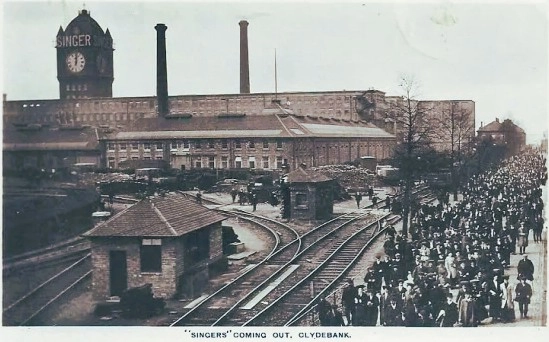
<p class="font-claude-response-body break-words whitespace-normal leading-[1.7]"><span style="color: #000000;">When I. M. Singer &amp; Co. was reorganized as the <strong>Singer Manufacturing Company</strong> in 1863, the formal president was Inslee Hopper, a company accountant. The actual president was Edward Clark. He oversaw the construction of the Elizabethport, New Jersey factory in 1873, which would soon produce more sewing machines per year than any plant on earth. He pushed the company into Glasgow, Hamburg, and Montreal. He set the global standard for interchangeable parts in consumer machinery — a discipline borrowed from the U.S. Army Ordnance Department and applied, for the first time, to a domestic appliance.</span></p>
<p class="font-claude-response-body break-words whitespace-normal leading-[1.7]"><span style="color: #000000;">When Singer died in England in 1875, Clark formally became president of Singer Manufacturing Company. He held the office for seven years, until his own death in 1882. By then, Singer was the first American multinational corporation in the modern sense — vertically integrated, internally financed, trading under a single brand on every inhabited continent.</span></p>
<p class="font-claude-response-body break-words whitespace-normal leading-[1.7]"><span style="color: #000000;">The showman started the brand. The lawyer built the machine that outlived him.</span></p>
<p> </p>
<p class="font-claude-response-body break-words whitespace-normal leading-[1.7]"><span style="color: #000000;"><img src="https://static.super.website/fs/super-website/userFiles/focusnova/uploaded-media/peopleleavingsingersewingmachinefactoryclydebank-17782690003461.webp" alt="People_leaving_Singer_Sewing_Machine_Factory_Clydebank" width="768" height="478" data-width="752" data-height="468"></img></span></p>
<p class="font-claude-response-body break-words whitespace-normal leading-[1.7]"><span style="font-size: 18px; color: #000000;"><em>Singer Sewing Machine Factory Clydebank</em></span></p>
<p> </p>
<hr class="border-border-200 border-t-0.5 my-3 mx-1.5"></hr>
<h2 class="text-text-100 mt-3 -mb-1 text-[1.125rem] font-bold"><span style="color: #000000;">The Dakota and the Clark legacy</span></h2>
<p class="font-claude-response-body break-words whitespace-normal leading-[1.7]"> </p>
<p class="font-claude-response-body break-words whitespace-normal leading-[1.7]"><span style="color: #000000;">Manhattan real estate was Clark's quieter obsession. By the 1870s he had bought parcels in upper Manhattan that anyone with a current sense of geography would have called a mistake. The Upper West Side in 1880 was a stretch of unfinished streets and squatter shacks, separated from polite New York by a long carriage ride.</span></p>
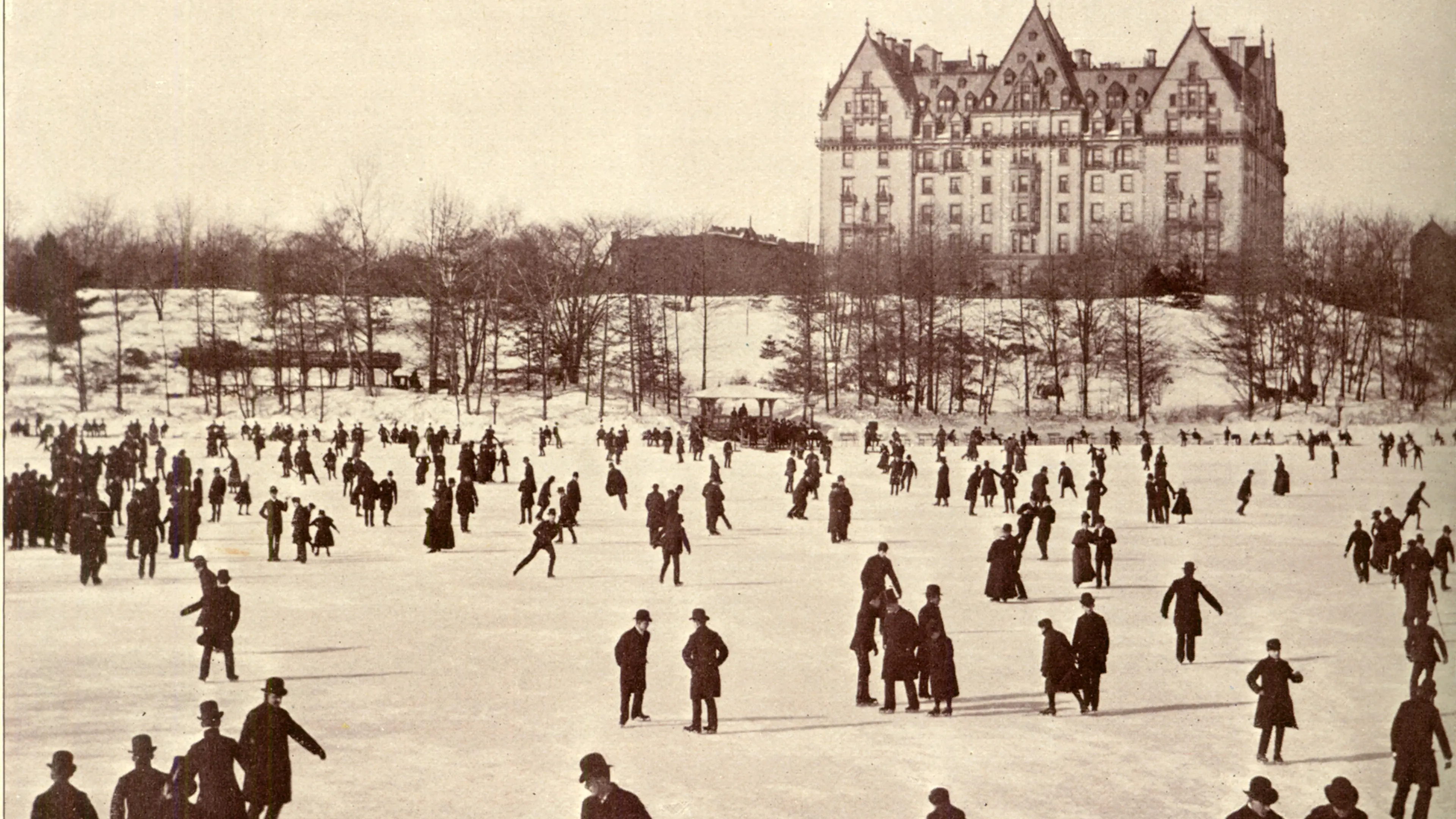
<p class="font-claude-response-body break-words whitespace-normal leading-[1.7]"><span style="color: #000000;">Clark hired <strong>Henry Janeway Hardenbergh</strong>, a young New Brunswick–born architect with a feeling for European hotel architecture, and gave him the brief: a luxury apartment building so far north of the city that it might as well be in the Dakota Territory. The nickname stuck. The building became <strong>the Dakota</strong>.</span></p>
<p class="font-claude-response-body break-words whitespace-normal leading-[1.7]"><span style="color: #000000;">Construction began in October 1880. The total cost ran past a million dollars, an unprecedented sum for residential construction. Clark died on October 14, 1882, of malarial fever at his country estate near Cooperstown. The Dakota opened to its first tenants in 1884. Ninety-six years after that, on the night of December 8, 1980, John Lennon was shot to death at its main entrance. The building has been continuously occupied since opening.</span></p>
<p class="font-claude-response-body break-words whitespace-normal leading-[1.7]"><span style="color: #000000;">In his will, Clark bequeathed fifty thousand dollars to Williams College — used to build Clark Hall, still in use. He left two hundred fifty thousand dollars to each of his four grandsons, plus the Dakota itself to twelve-year-old <strong>Edward Severin Clark</strong>. The bulk of the residual estate — between twenty-five and fifty million dollars, the equivalent of roughly eight hundred million to one and a half billion in today's money — went to his only surviving son, <strong>Alfred Corning Clark</strong>.</span></p>
<h3 class="text-text-100 mt-2 -mb-1 text-base font-bold"> </h3>
<h3 class="text-text-100 mt-2 -mb-1 text-base font-bold"><span style="color: #000000;">Cooperstown and the Clark dynasty</span></h3>
<p> </p>
<p class="font-claude-response-body break-words whitespace-normal leading-[1.7]"><span style="color: #000000;">Alfred's sons turned Singer wealth into American culture. <strong>Stephen C. Clark</strong> and <strong>Sterling Clark</strong> became two of the most important art collectors in the United States. Stephen donated the family land in Cooperstown that became the National Baseball Hall of Fame in 1939. Sterling's collection of French Impressionists became the Clark Art Institute in Williamstown — built on the same hill where his grandfather had studied a century earlier.</span></p>
<p class="font-claude-response-body break-words whitespace-normal leading-[1.7]"><span style="color: #000000;">The sewing machine paid for the museum that bought the Renoirs.</span></p>
<p class="font-claude-response-body break-words whitespace-normal leading-[1.7]"> </p>
<p class="font-claude-response-body break-words whitespace-normal leading-[1.7]"><span style="color: #000000;"><img src="https://static.super.website/fs/super-website/userFiles/focusnova/uploaded-media/dakota-nyc--17782676307954.webp" alt="Skaters on the lake in Central Park. The Dakota dominated the scene." width="813" height="457" data-width="923" data-height="519"></img></span></p>
<p class="font-claude-response-body break-words whitespace-normal leading-[1.7]"><span style="font-size: 18px; color: #000000;"><em>Skaters on the lake in Central Park. The Dakota dominated the scene.</em></span></p>
<p class="font-claude-response-body break-words whitespace-normal leading-[1.7]"> </p>
<hr class="border-border-200 border-t-0.5 my-3 mx-1.5"></hr>
<h2 class="text-text-100 mt-3 -mb-1 text-[1.125rem] font-bold"><span style="color: #000000;">Why Edward Clark was forgotten</span></h2>
<p> </p>
<p class="font-claude-response-body break-words whitespace-normal leading-[1.7]"><span style="color: #000000;">History does not remember the architects of systems. It remembers faces.</span></p>
<p class="font-claude-response-body break-words whitespace-normal leading-[1.7]"><span style="color: #000000;">Singer had a face. He had four families, two dozen children, a yellow carriage, a 115-room English mansion, and a habit of getting his name into the New York Herald. He was the brand. He performed it.</span></p>
<p class="font-claude-response-body break-words whitespace-normal leading-[1.7]"><span style="color: #000000;">Clark performed nothing. He was a Williams College lawyer, a Sunday school teacher, a man who came home for dinner. He worked sixteen hours a day in a Manhattan office, said little, and produced almost no quotable material. His personal correspondence, when historians went looking after his death, was thin. He left a few business letters and a will.</span></p>
<p class="font-claude-response-body break-words whitespace-normal leading-[1.7]"><span style="color: #000000;">He didn't put his face on the machine because he understood, correctly, that no woman in Iowa would buy a sewing machine endorsed by a New York lawyer. The brand needed a maker. Singer was an excellent maker.</span></p>
<p class="font-claude-response-body break-words whitespace-normal leading-[1.7]"><span style="color: #000000;">What Clark left behind is harder to see because it has no emblem. It is the structure of the modern consumer economy — paying for things in installments, walking into a branded showroom, expecting the brand to behave the same in Tokyo as in Boston, settling patent disputes through licensing rather than war. Most of us have never thought about it. All of us live inside it.</span></p>
<p class="font-claude-response-body break-words whitespace-normal leading-[1.7]"><span style="color: #000000;">A man who builds the stage is forgotten more easily than the actor on it. He should not be.</span></p>
<p class="font-claude-response-body break-words whitespace-normal leading-[1.7]"> </p>
<hr class="border-border-200 border-t-0.5 my-3 mx-1.5"></hr>
<h2 class="text-text-100 mt-3 -mb-1 text-[1.125rem] font-bold"><span style="color: #000000;">Edward Clark today: the prototype of the operating partner</span></h2>
<p> </p>
<p class="font-claude-response-body break-words whitespace-normal leading-[1.7]"><span style="color: #000000;">If Edward Clark walked into a venture capital meeting in 2026, he would be hired before lunch. He is the prototype of the operating partner — the person who joins the founder and translates vision into structure. To Clark, patents were artillery. Licenses were treaties. He understood that distribution beats invention. He understood that brand discipline matters more than founder genius.</span></p>
<p class="font-claude-response-body break-words whitespace-normal leading-[1.7]"><span style="color: #000000;">He understood, above all, that founders sometimes need to be removed from their own companies. Not fired. Sent to Europe. Quietly rendered absent. Kept on the cap table, off the front page.</span></p>
<p class="font-claude-response-body break-words whitespace-normal leading-[1.7]"><span style="color: #000000;">Singer's tech-bro descendants — the founders who keep getting moved sideways by the boards their own success summoned — are walking a path Clark surveyed in 1856. The ground is the ground he leveled.</span></p>
<p class="font-claude-response-body break-words whitespace-normal leading-[1.7]"><span style="color: #000000;">Clark didn't change the world by being seen.</span></p>
<p class="font-claude-response-body break-words whitespace-normal leading-[1.7]"><span style="color: #000000;">He changed it by understanding what almost no one in 1856 understood: that the future of capitalism was not the machine. It was the machine plus the payment plan plus the showroom plus the brand. The partnership of Edward Clark and Singer was the laboratory where the consumer credit system of the twentieth century was first written down.</span></p>
<p class="font-claude-response-body break-words whitespace-normal leading-[1.7]"><span style="color: #000000;">He sat in a back office on Nassau Street and quietly invented the twenty-first century.</span></p>
<p class="font-claude-response-body break-words whitespace-normal leading-[1.7]"> </p>
<hr class="border-border-200 border-t-0.5 my-3 mx-1.5"></hr>
<h2 class="text-text-100 mt-3 -mb-1 text-[1.125rem] font-bold"><span style="color: #000000;">Frequently asked questions</span></h2>
<p> </p>
<h3 class="text-text-100 mt-2 -mb-1 text-base font-bold"><span style="color: #000000;">Who was Edward Clark of Singer?</span></h3>
<p> </p>
<p class="font-claude-response-body break-words whitespace-normal leading-[1.7]"><span style="color: #000000;"><strong>Edward Cabot Clark</strong> (1811–1882) was an American lawyer and businessman who co-founded the Singer Sewing Machine Company with Isaac Merritt Singer in 1851. He invented the hire-purchase installment plan, engineered the first U.S. patent pool, and served as president of Singer Manufacturing Company from 1875 until his death.</span></p>
<p class="font-claude-response-body break-words whitespace-normal leading-[1.7]"> </p>
<h3 class="text-text-100 mt-2 -mb-1 text-base font-bold"><span style="color: #000000;">Who invented the installment plan?</span></h3>
<p class="font-claude-response-body break-words whitespace-normal leading-[1.7]"> </p>
<p class="font-claude-response-body break-words whitespace-normal leading-[1.7]"><span style="color: #000000;">The first major installment plan in American consumer history was created by <strong>Edward Clark</strong> for Singer in 1856. Customers paid five dollars down and five dollars a month until the machine was paid off — making a one-hundred-twenty-five-dollar appliance affordable to households earning five hundred dollars a year. The model became the template for modern consumer credit.</span></p>
<p class="font-claude-response-body break-words whitespace-normal leading-[1.7]"> </p>
<h3 class="text-text-100 mt-2 -mb-1 text-base font-bold"><span style="color: #000000;">Who built the Dakota in New York?</span></h3>
<p class="font-claude-response-body break-words whitespace-normal leading-[1.7]"> </p>
<p class="font-claude-response-body break-words whitespace-normal leading-[1.7]"><span style="color: #000000;"><strong>The Dakota</strong> was commissioned in 1880 by Edward Clark. The architect was Henry Janeway Hardenbergh. Construction began in October 1880 and was completed in 1884, two years after Clark's death. Clark left the building to his twelve-year-old grandson Edward Severin Clark. It remains one of the most famous addresses in the world.</span></p>
<p class="font-claude-response-body break-words whitespace-normal leading-[1.7]"> </p>
<h3 class="text-text-100 mt-2 -mb-1 text-base font-bold"><span style="color: #000000;">What is a patent pool?</span></h3>
<p class="font-claude-response-body break-words whitespace-normal leading-[1.7]"> </p>
<p class="font-claude-response-body break-words whitespace-normal leading-[1.7]"><span style="color: #000000;">A <strong>patent pool</strong> is an agreement among multiple patent holders to license their technology jointly. The first major American patent pool was the <strong>Sewing Machine Combination</strong>, organized in 1856 by Edward Clark and attorney Orlando B. Potter. Four manufacturers — Singer, Wheeler &amp; Wilson, Grover &amp; Baker, and Elias Howe — combined nine core patents and licensed them to twenty-four other firms. The pool ran until 1877 and became the model for later patent agreements in radio, aviation, and cinema.</span></p>
<p class="font-claude-response-body break-words whitespace-normal leading-[1.7]"> </p>
<h3 class="text-text-100 mt-2 -mb-1 text-base font-bold"><span style="color: #000000;">Who was Isaac Singer's business partner?</span></h3>
<p class="font-claude-response-body break-words whitespace-normal leading-[1.7]"> </p>
<p class="font-claude-response-body break-words whitespace-normal leading-[1.7]"><span style="color: #000000;">Isaac Singer's principal business partner was <strong>Edward Clark</strong>. They met in 1851, when Singer needed a patent attorney he could not afford to pay. Singer gave Clark a three-eighths stake in the future company in lieu of legal fees. Clark managed the company through the 1860s and 1870s, became president after Singer's death in 1875, and built Singer into the world's first multinational consumer brand.</span></p>
<p class="font-claude-response-body break-words whitespace-normal leading-[1.7]"> </p>
<h3 class="text-text-100 mt-2 -mb-1 text-base font-bold"><span style="color: #000000;">How rich was Edward Clark when he died?</span></h3>
<p class="font-claude-response-body break-words whitespace-normal leading-[1.7]"> </p>
<p class="font-claude-response-body break-words whitespace-normal leading-[1.7]"><span style="color: #000000;">At his death in October 1882, Edward Clark's estate was valued at between twenty-five and fifty million dollars — roughly eight hundred million to one and a half billion in today's money. That figure excluded his real estate, which was distributed separately. By comparison, Isaac Singer's estate at his death in 1875 was about thirteen million. Clark's wealth was nearly twice his partner's.</span></p>
<p class="font-claude-response-body break-words whitespace-normal leading-[1.7]"> </p>
<hr class="border-border-200 border-t-0.5 my-3 mx-1.5"></hr>
<p style="text-align: center;"><span style="font-size: 38px;">Read more</span></p>
<p style="text-align: center;"><span style="color: #270101;"><a style="color: #270101;" href="https://www.singerseries.com/singer-journal/singer-project/the-hungry-wolf-in-a-golden-muzzle-who-was-isaac-singer" target="_blank" rel="noopener noreferrer"><span style="font-size: 18px;"><strong>The Hungry Wolf in a Golden Muzzle: Who Was Isaac Singer?</strong></span></a></span> — runaway apprentice, failed Shakespearean actor, bigamist with five families and twenty-four children — the "scoundrel" who perfected the sewing machine and changed the world.<br><span style="color: #270101;"><a class="underline underline underline-offset-2 decoration-1 decoration-current/40 hover:decoration-current focus:decoration-current" style="color: #270101;" href="https://www.singerseries.com/singer-journal/singer-project/winnaretta-singer-polignac-legacy"><strong>Winnaretta Singer: The Scoundrel's Daughter</strong></a></span> — the inventor's daughter who spent the sewing-machine fortune on Stravinsky, Satie and Marie Curie, and turned the "scoundrel's" name into the music of the 20th century.</p>
<p style="text-align: center;"><a href="/{{pageId:1}}"><span style="font-size: 18px;"><strong><span style="color: #270101;">About S</span><span style="color: #270101;">inger Series</span></strong></span></a> — the project behind these essays, including the forthcoming book and series.</p>
<p> </p>
<p> </p>
<hr></hr>
<p style="text-align: center;"><strong><span style="color: #000000;">Subscribe to the Singer Series and receive the first chapter of   </span></strong><span style="font-size: 18px;">SINGER: <span class="red">The Scoundrel </span>Who Changed the World  <strong><span style="color: #000000;">free before publication.</span></strong></span><strong><span style="color: #000000;">            <a class="btn buttons1474874760576" contenteditable="false" href="https://t.me/SingerSeriesBot?start=chapter1" target="_blank" rel="noopener">Get the chapter 1</a></span></strong></p>
<hr class="border-border-200 border-t-0.5 my-3 mx-1.5"></hr>
<p> </p>
<p> </p>]]>
            </summary>
                            <link rel="enclosure" href="https://static.super.website/fs/super-website/userFiles/focusnova/images/a-2-edward-cabot-clark-17782705416827.png" length="4272665" type="image/png" />
                        <category term="Singer Project" />
            <updated>2026-05-08T19:43:39+00:00</updated>
                            <dc:description><![CDATA[Lawyer, partner, architect — the quiet genius who turned Isaac Singer&#039;s chaos into the first global consumer brand. The man behind the Dakota.]]></dc:description>
                    </entry>
            <entry>
            <title><![CDATA[The Hungry Wolf in a Golden Muzzle: Who Was Isaac Singer?]]></title>
            <link rel="alternate" href="https://www.singerseries.com/singer-journal/singer-project/the-hungry-wolf-in-a-golden-muzzle-who-was-isaac-singer" />
            <id>https://www.singerseries.com/singer-journal/singer-project/the-hungry-wolf-in-a-golden-muzzle-who-was-isaac-singer</id>
            <author>
                <name><![CDATA[Юрий Сергеевич Болдырев]]></name>
                                    <email><![CDATA[chanko@mail.ru]]></email>
                            </author>
            <summary type="html">
                <![CDATA[<p> </p>
<p><span style="color: #000000;">The gold letters spelling <strong>SINGER</strong> have been seen in nearly every corner of the inhabited world. They were stamped in Cyrillic in St. Petersburg, Arabic in Cairo, Japanese script in Kyoto. The sewing machine they sat on traveled with the kind of confidence usually reserved for national flags.</span></p>
<p><span style="color: #000000;">Everyone knows the brand.</span></p>
<p><span style="color: #000000;">Almost no one remembers the man whose name it is. That's not an accident. His own partners worked very hard to scrub the face of "the scoundrel" out of company advertising, faster than they got his body out of the 115-room English country house where he died in 1875.</span></p>
<p><span style="color: #000000;">Meet <strong>Isaac Merritt Singer</strong>. Last child of a Saxon immigrant father and a Quaker mother of Dutch ancestry. Failed Shakespearean actor. Bigamist with four parallel households and more than two dozen children. The man who didn't love the thing that changed the world.</span></p>
<p> </p>
<h2><span style="color: #000000; font-size: 38px;">A giant with a provincial Hamlet's voice</span></h2>
<p> </p>
<p><span style="color: #000000;">Six foot five. About 196 centimeters. In the mid-19th century that was almost a deformity. Reddish-blond beard, shoulders cut for plowing or stage combat, a voice trained to fill two hundred seats.</span></p>
<p><span style="color: #000000;">He'd trained that voice for years. Before he was an industrialist, Isaac Singer was a touring actor, running his own outfit — the <em>Merritt Players</em> — under the stage name "Isaac Merritt." Shakespeare in rural Ohio halls. Richard III in half-empty Pennsylvania halls. Hamlet to audiences who paid in copper coins and slipped out before the second act.</span></p>
<p><span style="color: #000000;">At twelve he ran from home. From Oswego, on the shore of Lake Ontario, where his German father had remarried and the new wife had decided her stepson was a burden. Sixty miles west on foot, to an older brother's machine shop. Then evening school at the Mechanics' Society, by the stub of a candle, finger tracing letters in a primer. By fifteen he could read.</span></p>
<p><span style="color: #000000;">By forty he had nothing the world had promised him.</span></p>
<p> </p>
<h2><span style="color: #000000; font-size: 38px;">A hunger you couldn't feed</span></h2>
<p> </p>
<p><span style="color: #000000;">The engine inside Isaac wasn't greed. Greed was the symptom. The engine was the fear of disappearing.</span></p>
<p><span style="color: #000000;">His biographer Ruth Brandon puts it without mercy: he had, she writes, <em>"an insatiable need for attachment to women"</em> — and underneath the lust, a craving for the family he'd never had. Four households in one city wasn't libertinism in the simple sense. This was a man whose mother walked out when he was ten, whose father looked away, and who was now filling the world with himself the way you fill a hole in the ground. Each child a flag staked in territory.</span></p>
<p><span style="color: #000000;">Twenty-four children. He acknowledged and supported every one.</span></p>
<p><span style="color: #000000;">When Orson Phelps's Boston workshop showed him a misbehaving Lerow &amp; Blodgett sewing machine in 1850, Isaac's first reaction was contempt: <em>"What a devilish machine! You want to do away with the only thing that keeps women quiet, their sewing!"</em> But the moment money entered the conversation, he delivered the line that became the diagnosis of his entire personality:</span></p>
<blockquote>
<p><strong><span style="font-size: 22px; color: #000000;"><em>I don't give a damn for the invention. The dimes are what I am after.</em></span></strong></p>
</blockquote>
<p><span style="color: #000000;">Not a pose. A confession.</span></p>
<p> </p>
<h2><span style="color: #000000; font-size: 38px;">Eleven days that rewrote a century</span></h2>
<p> </p>
<p><span style="color: #000000;">September 1850. Phelps's shop, 19 Harvard Place, Boston. Seventeen hundred dollars from George Zieber over years of failure, forty dollars for materials, and Phelps's workbench. Isaac sat down at it.</span></p>
<p><span style="color: #000000;">Eleven days later the bench held the first practical sewing machine in history. A straight-line shuttle instead of a circular one. A vertical needle. A presser foot to hold the cloth. A foot treadle that, for the first time in human history, freed a woman's hands from her sewing.</span></p>
<p><span style="color: #000000;">He hadn't <em>invented</em> the sewing machine. People had been trying for thirty years. What he did, nobody else had managed: he turned a tinkerer's idea into an industry. And he did it for the dimes, not for the cause.</span></p>
<p><span style="color: #000000;">What came next is the part Harvard Business School ought to teach. Installments at five dollars a month instead of $125 cash — the first national consumer-credit plan in American history. Marble-and-gilt showrooms on Broadway with live demonstrators, a century and a half before Apple Stores. Trade-in programs in which competitors' old machines were publicly destroyed. The first global patent pool. Factories in Scotland, France, and a Russian town outside Moscow. A canary-yellow carriage that seated thirty-one, in which Isaac paraded down Fifth Avenue while polite New York winced at the vulgarity.</span></p>
<p><span style="color: #000000;">In parallel: four families, a flight to Europe under the false name, a bigamy scandal in the press, and a fortune of thirteen million dollars at his death.</span></p>
<p> </p>
<h2><span style="color: #000000; font-size: 38px;">What the world got</span></h2>
<p> </p>
<p><span style="color: #000000;">He died in England, in his country pile, never knowing the most important thing.</span></p>
<p><span style="color: #000000;">Never knowing that Russian women would start calling his machine <em>Zina</em> — a woman's name, the way you'd name a stove or an old car you trust. That during the Second World War, when men were at the front, <em>Zina</em> would be the only thing keeping millions of households from starving. That in besieged Leningrad, sixty-six years after he was buried, a woman with a daughter on her lap would look at the black machine with the gold letters as the only thing standing between them and winter.</span></p>
<p><span style="color: #000000;">Never knowing that his daughter Winnaretta would become Princesse Edmond de Polignac and use his sewing-machine money to <strong>bankroll Stravinsky, Satie, Fauré and Ravel</strong>.</span></p>
<p><span style="color: #000000;">That his machine would collapse a week of hand-sewing into a single night — and let millions of women earn a living from it — because one scoundrel in a Boston workshop didn't want to die poor.</span></p>
<p><span style="color: #000000;">The honest revolutions tend to happen by accident.</span></p>
<p> </p>
<h2><span style="color: #000000; font-size: 38px;">Why we're telling this story</span></h2>
<p> </p>
<p><span style="color: #000000;">In August 2026, Singer's patent turns 175. To mark the date, the first full-length literary biography of Isaac Singer is being published — narrative biography in the tradition of Ron Chernow, Erik Larson, Walter Isaacson, where the documentary record is bedrock and the scenes are built on top of it. No hagiography. No apologies. No convenient silences.</span></p>
<p><span style="color: #000000;">This blog is the road there. We'll get to the man Isaac betrayed first — the only person who'd ever believed in him. We'll get to Edward Clark, the lawyer with the Sunday-school face who actually ran the empire while the scoundrel was abroad running from it. We'll get to why Isaac's eldest son inherited exactly five hundred dollars out of thirteen million.</span></p>
<p><span style="color: #000000;">And we'll get to what's left of Singer today: in museums, in family attics, in tailor shops from Lagos to Lahore, in heirlooms that get passed from grandmother to granddaughter, still stitching.</span></p>
<p><span style="color: #000000;">The story is just beginning.</span></p>
<p> </p>
<hr></hr>
<p style="text-align: center;"><span style="font-size: 38px;">Read more</span></p>
<p style="text-align: center;"> </p>
<p style="text-align: center;"><a href="https://www.singerseries.com/singer-journal/singer-project/edward-clark-singer-empire" target="_blank" rel="noopener noreferrer"><span style="font-size: 18px; color: #270101;"><strong>Edward Clark: The Lawyer Who Built the Singer Empire</strong></span></a> — the quiet partner who turned Singer's chaos into the world's first global consumer brand. The man behind the Dakota.</p>
<p style="text-align: center;"><span style="font-size: 18px;"><a href="https://www.singerseries.com/singer-journal/singer-project/winnaretta-singer-polignac-legacy" target="_blank" rel="noopener noreferrer"><span style="color: #270101;"><strong>The Scoundrel's Daughter: Winnaretta Singer</strong></span></a></span> — how Singer's sewing-machine money bought the music of the 20th century.<br><span style="color: #270101;"><a style="color: #270101;" href="/{{pageId:1}}" target="_blank" rel="noopener noreferrer"><strong><span style="font-size: 18px;">About Singer Series</span></strong></a></span> — the book, the series, the film. One story. Three formats.</p>
<hr></hr>
<p style="text-align: center;"><strong><span style="color: #000000;">Subscribe to the Singer Series and receive the first chapter of   </span></strong><span style="font-size: 18px;"><a href="https://singer-book.com" target="_blank" rel="noopener noreferrer"><span style="color: #270101;">SINGER: <span class="red">The Scoundrel </span>Who Changed the World</span></a>  <strong><span style="color: #000000;">free before publication.</span></strong></span><strong><span style="color: #000000;">            <a class="btn buttons1474874760576" contenteditable="false" href="https://t.me/SingerSeriesBot?start=chapter1" target="_blank" rel="noopener">Get the chapter 1</a></span></strong></p>
<hr></hr>
<p> </p>]]>
            </summary>
                            <link rel="enclosure" href="https://static.super.website/fs/super-website/userFiles/focusnova/images/a-1-isaac-merritt-singer-17782705817775.png" length="4598549" type="image/png" />
                        <category term="Singer Project" />
            <updated>2026-05-06T06:07:34+00:00</updated>
                            <dc:description><![CDATA[Actor, bigamist, scoundrel — and the man behind the sewing machine that stitched the world together. The real story of Isaac Singer. 24 children. $13 million. One devilish machine.]]></dc:description>
                    </entry>
    </feed>