

Paris, 1905. In the music room on the avenue Henri-Martin the last Bach chord has just died away. The hostess — Princesse Edmond de Polignac, born Winnaretta Singer — sets aside a financial report from the Singer company, whose machines now sell across much of the world. A hundred steps away, in a basement workroom, a machine still chatters toward dawn: some woman finishing a stranger's dress to feed her children.
Same rhythm. Same cast iron. One name.
With the cheap coins squeezed from washerwomen and seamstresses the world over, the industrialist's daughter was paying for Stravinsky, Satie and de Falla — and keeping Ravel in her salon. He chased small change. A new world was the change he got back.
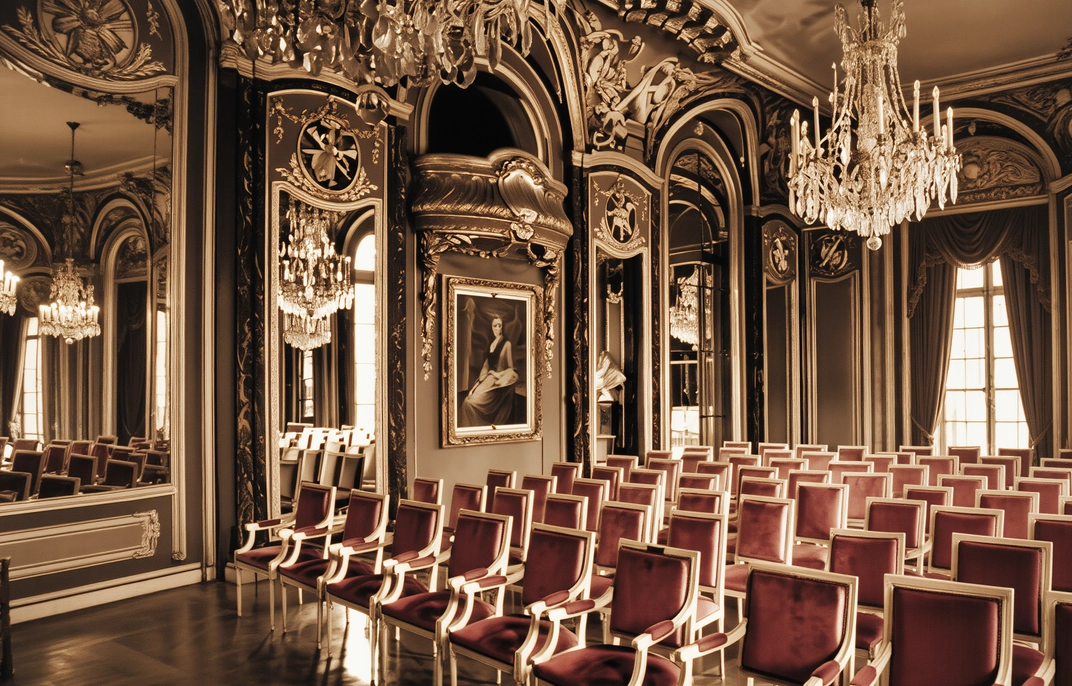
The music room of the Polignac hôtel on the avenue Henri-Martin — where Stravinsky, Satie and Ravel were first heard.
Key facts
- Winnaretta Eugénie Singer, born 8 January 1865, Yonkers, New York; died 1943.
- Daughter of Isaac Singer and Isabella Boyer; Princesse Edmond de Polignac.
- Inheritance (1877): ~$167,000 in savings, further cash, over $600,000 in Singer stock, plus a share of the English estate.
- Patron of Stravinsky, Satie, Falla, Poulenc, Ravel; supported Nadia Boulanger and the Ballets Russes.
- Funded Marie Curie's research and Le Corbusier's Cité de Refuge.
- Founded the Fondation Singer-Polignac, 1928 (still active).
- Left paintings by Monet, Manet and Tiepolo to the Louvre.
- Buried in the Singer crypt, Torquay, Devon.
"A name I curse"
At a Paris auction in the early 1890s two bidders fought over a single Monet — A Field of Tulips near Haarlem. An American woman won it. The loser — the impoverished Prince Edmond de Polignac — cursed the picture: it had been carried off, he said, by "an American who bears a name I curse." The name was Singer.
A few years later he married that American, and got the painting after all. With her came a fortune that would help redraw the map of European art.
This is the story of what the "scoundrel’s" name became — and of the daughter who turned it.
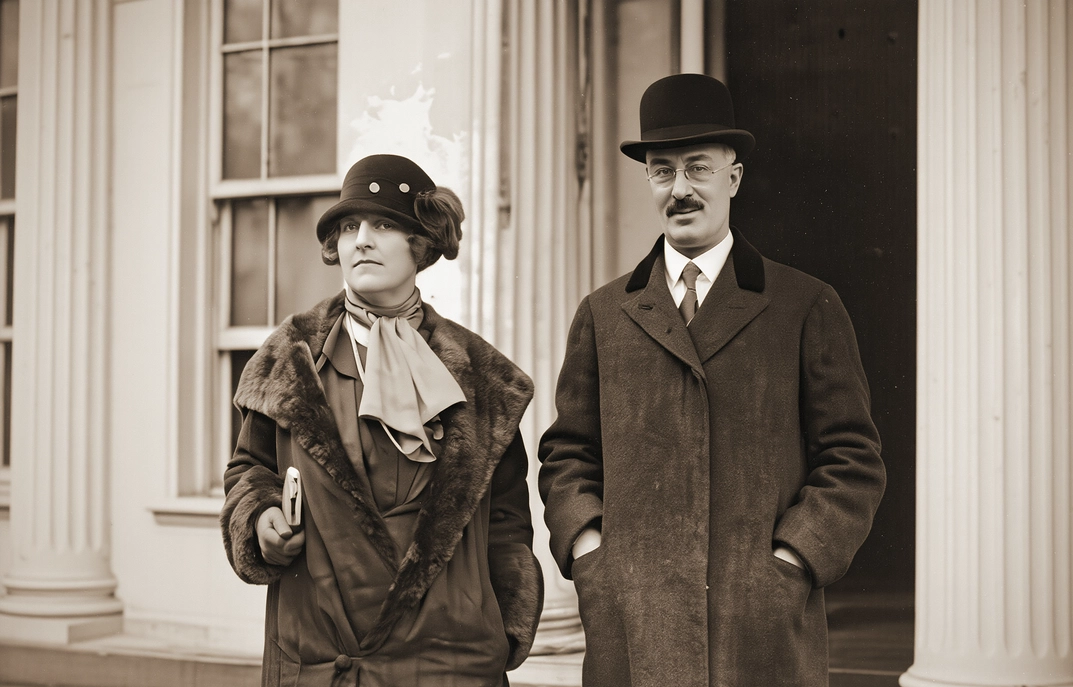
Winnaretta and Prince Edmond de Polignac, soon after their 1893 mariage blanc — a marriage of friendship that built a salon.
The last daughter but one
Winnaretta Eugénie Singer was born in Yonkers on 8 January 1865, the second-to-last daughter of Isaac Merritt Singer — the man who "perfected the sewing machine" and made millions on it. Of his twenty-four children only one girl came after her — her younger sister Isabelle-Blanche. She spent two years in New York; she was raised in France and England, and inherited young: by the Singer Foundation's own account, $167,000 from her father's personal savings, tens of thousands more in cash, and over $600,000 in Singer stock, plus a share of the English estate. A fabulously rich heiress at ten — though she would not take outright control of the money until she came of age at twenty-one.
"An eight-thousand-volt being." — Armande de Polignac, her niece, on Winnaretta
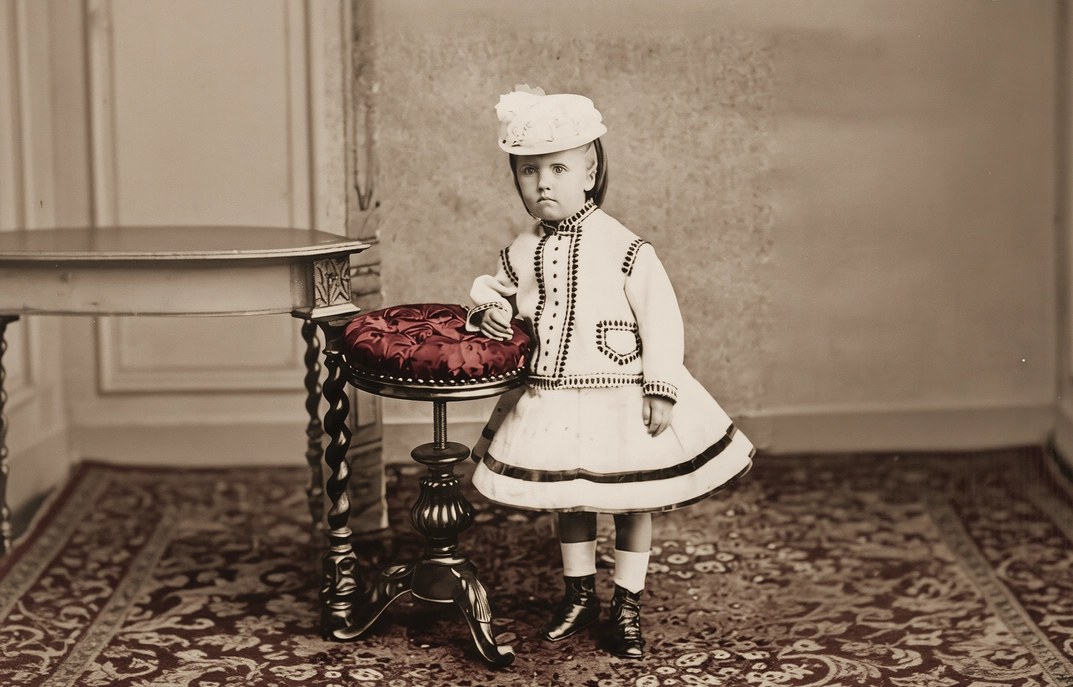
Winnaretta Singer at three, around 1868 — the sewing-machine heiress who would become Europe's foremost music patron.
A salon run like a factory
After her husband's death in 1901 Winnaretta turned the fortune into patronage — and ran it with the grip of a managing director. When she commissioned a work, she imposed terms closer to an industrial contract: the première had to happen in her salon; the dedication was hers; the signed manuscript was hers; the composer owed her a piano reduction for private hearings; an advance, then the balance on delivery; and six months' exclusivity, performed nowhere else without her consent.
Her father industrialized the stitch. She industrialized the commission. Out of that system came much of what we now call musical modernism.
"Alone in an armchair, the princess listens, and nothing escapes her. She says not a word, she never interrupts. But at the very end she sums up: 'Here is what I would do, in your place.'" — Albert Flament, La Revue de Paris, 1937
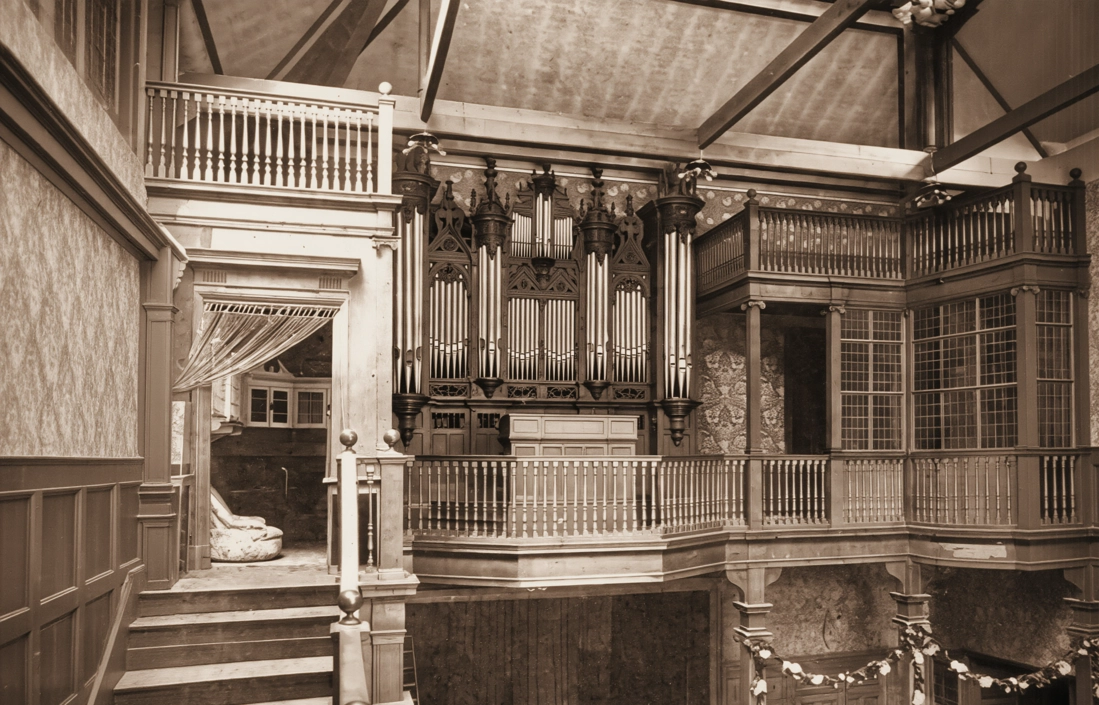
Her music studio on the rue Cortambert, built to seat an orchestra and two hundred guests, with a Cavaillé-Coll organ she played herself.
What the money brought into the world
Not "art in general" — specific scores, paid for with sewing money:
- Igor Stravinsky — Renard, commissioned 1915. She gave Les Noces its private première in her own salon on 10 June 1923, three days before the Ballets Russes unveiled it to the public.
- Erik Satie — Socrate (1916), grown from her passion for Plato.
- Manuel de Falla — El retablo de maese Pedro (1923).
- Francis Poulenc — Concerto for Two Pianos (1932) and Organ Concerto (1938).
"The sun lit the most beautiful Monet I know — a field of tulips near Haarlem." — Marcel Proust, on an afternoon in her salon, Le Figaro, 1903
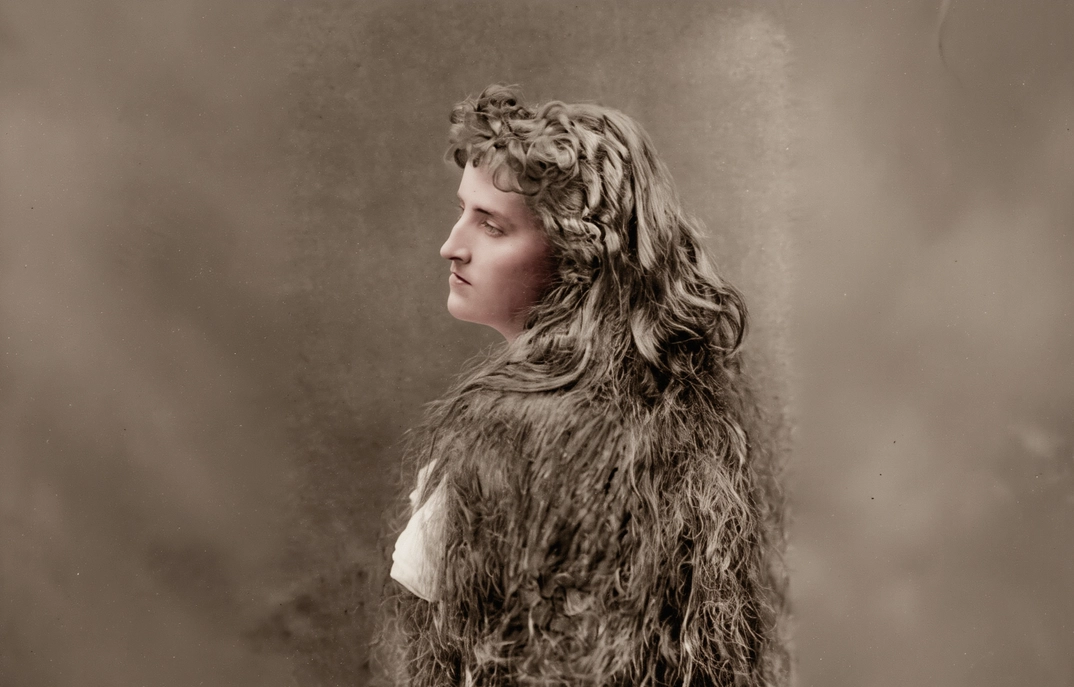
Winnaretta at eighteen, 1883 — four years before her mother married her to Prince Louis de Scey-Montbéliard
Not just music: science, concrete and the Louvre
The sewing money reached far beyond the salon.
She contributed to Marie Curie's Institut du Radium in Paris. She paid for Le Corbusier's Cité de Refuge for the Salvation Army — modernist architecture built to shelter the destitute. In 1928 she gave her patronage legal form, founding, with Raymond Poincaré and Maurice Paléologue, the Fondation Singer-Polignac, which to this day, nearly a century on, supports the arts, letters and sciences from her old mansion near the Trocadéro.
She left her own pictures — Monet, Manet, Tiepolo, Ingres, Whistler — to the Louvre, and endowed an anonymous fund that let the museum (and, from 1986, the Musée d'Orsay) acquire more than a hundred further works. The girl once asked to help catalogue the Louvre ended up filling its rooms.
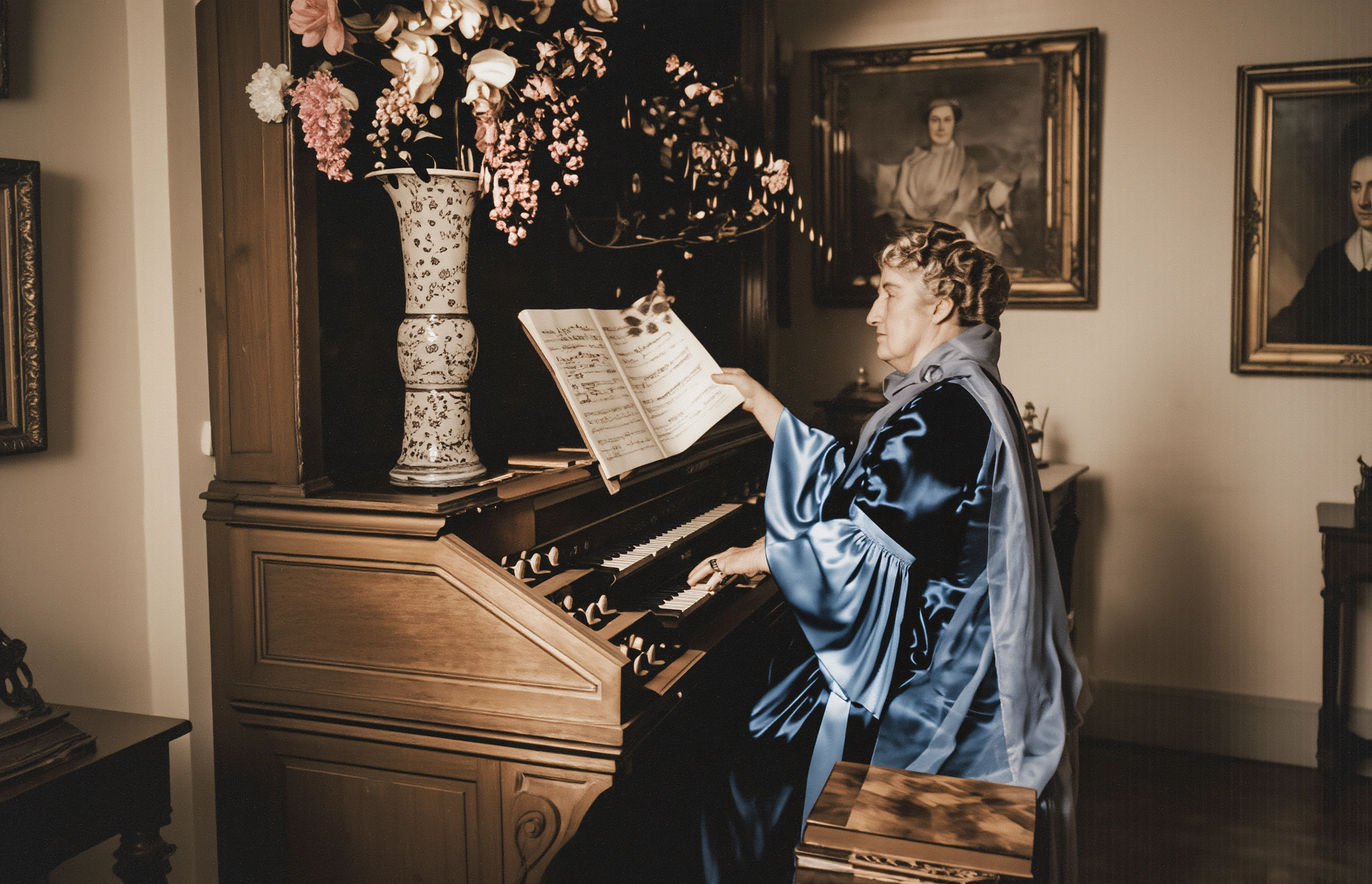
A working musician to the end: the Princesse de Polignac studying a score at the keyboard, early 1930s.
The echoes of her father
Here the story turns genuinely strange — because everything the daughter built rhymes with the father she worshipped.
The name. Isaac drove the word Singer in gold into cast iron, from Podolsk to Glasgow. Edmond cursed that name at an auction — then carried it himself. His daughter signed her canvases with it. Today it is a scientific foundation. The name of a cheap machine travelled all the way to an institution that funds physics and music.
Perfection. Her father "perfected the machine," driving mechanics to an absolute. With the same instinct for precision, his daughter drove other people's raw talent onto the stage.
The will. Of between thirteen and fifteen million dollars Isaac shared generously among a score of children — but to his eldest son William — born to Catharine Haley, the first wife Isaac had abandoned, who had dared side with his mother in her countersuit of 1863 — he left five hundred. Revenge from the grave. Winnaretta turned her own share into Stravinsky and Curie.
The ground. Father, husband and Winnaretta herself lie in one and the same Singer crypt in Torquay, Devon — the runaway apprentice, the French prince and the princess of the avant-garde, under one name on the stone.
And the central paradox. Isaac Singer had little use for women — except in bed and in his will. He gave them no freedom: the seamstress still sat over a stranger's dress until dawn. But the machine collapsed the cost of an hour, and those hours were finally worth something — a woman could feed her children, set up her own shop, survive where the men did not come home from the war. His daughter, with the very same coins, bought a century its music and its science. The greed went in; civilization came out.
There is a lovely legend that the sculptor Bartholdi gave the Statue of Liberty the face of Isaac's wife, Isabella. The image fits. The whole family met the immigrants in one harbour: his name on the iron of the machine, her face on the copper of the torch — while down the gangway came the women who would bend over that iron, and survive by it.
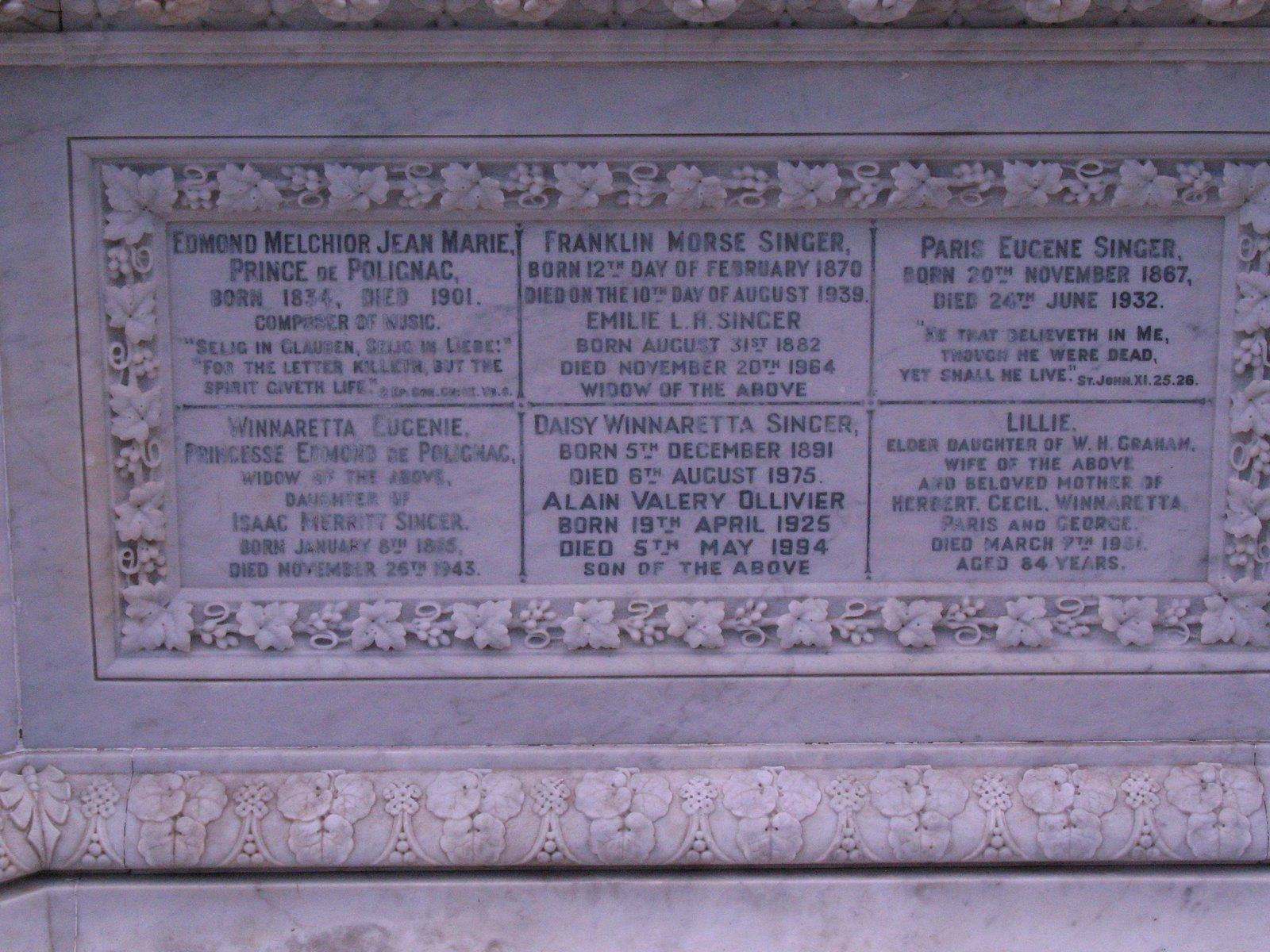
The Singer family memorial at Torquay, Devon — Winnaretta lies here beside her husband Edmond and her father Isaac, under one name.
The needle that outlasted the marble
How a penniless runaway apprentice built the empire that paid for all this is the spine of the book Singer: The Scoundrel Who Changed the World, out 12 August 2026, on the 175th anniversary of patent No. 8,294. This scene — Winnaretta at the organ, the machine below, two women separated by a hundred steps and a whole world — is where it ends.
Marble guards the dead; the needle, the living.
Frequently Asked Questions
Who was Winnaretta Singer?
Winnaretta Singer (1865–1943), Princesse de Polignac, was the daughter of sewing-machine magnate Isaac Singer and one of the most important patrons of twentieth-century music.
What did Winnaretta Singer commission?
Works from Stravinsky (Renard), Satie (Socrate), Falla, Poulenc and others. She gave the private première of Stravinsky's Les Noces in her salon on 10 June 1923, three days before its public unveiling.
Was Winnaretta Singer married?
Yes — to Prince Edmond de Polignac, a companionate marriage. He died in 1901; she never remarried.
What is the Fondation Singer-Polignac?
A foundation she established in 1928, with Raymond Poincaré and Maurice Paléologue, that still supports the arts, letters and sciences from her former Paris mansion.
Where is Winnaretta Singer buried?
In the Singer family crypt in Torquay, Devon, alongside her father Isaac and her husband.
Sources
- Sylvia Kahan, Music's Modern Muse: A Life of Winnaretta Singer, Princesse de Polignac (2003).
- Ruth Brandon, Singer and the Sewing Machine (1977).
- Fondation Singer-Polignac (singer-polignac.org).
- Marcel Proust, Le Figaro, 1903.
- Albert Flament, La Revue de Paris, 1937.
Historical photographs have been digitally restored and enhanced with AI; the memorial photograph is contemporary.
Read more
Edward Clark: The Lawyer Who Built the Singer Empire — the quiet partner who turned Singer's chaos into the world's first global consumer brand. The man behind the Dakota.
The Hungry Wolf in a Golden Muzzle: Who Was Isaac Singer? — runaway apprentice, failed Shakespearean actor, bigamist with five families and twenty-four children — the "scoundrel" who perfected the sewing machine and changed the world.
About Singer Series — the book, the series, the film. One story. Three formats.
Subscribe to the Singer Series and receive the first chapter of SINGER: The Scoundrel Who Changed the World free before publication. Get the chapter 1